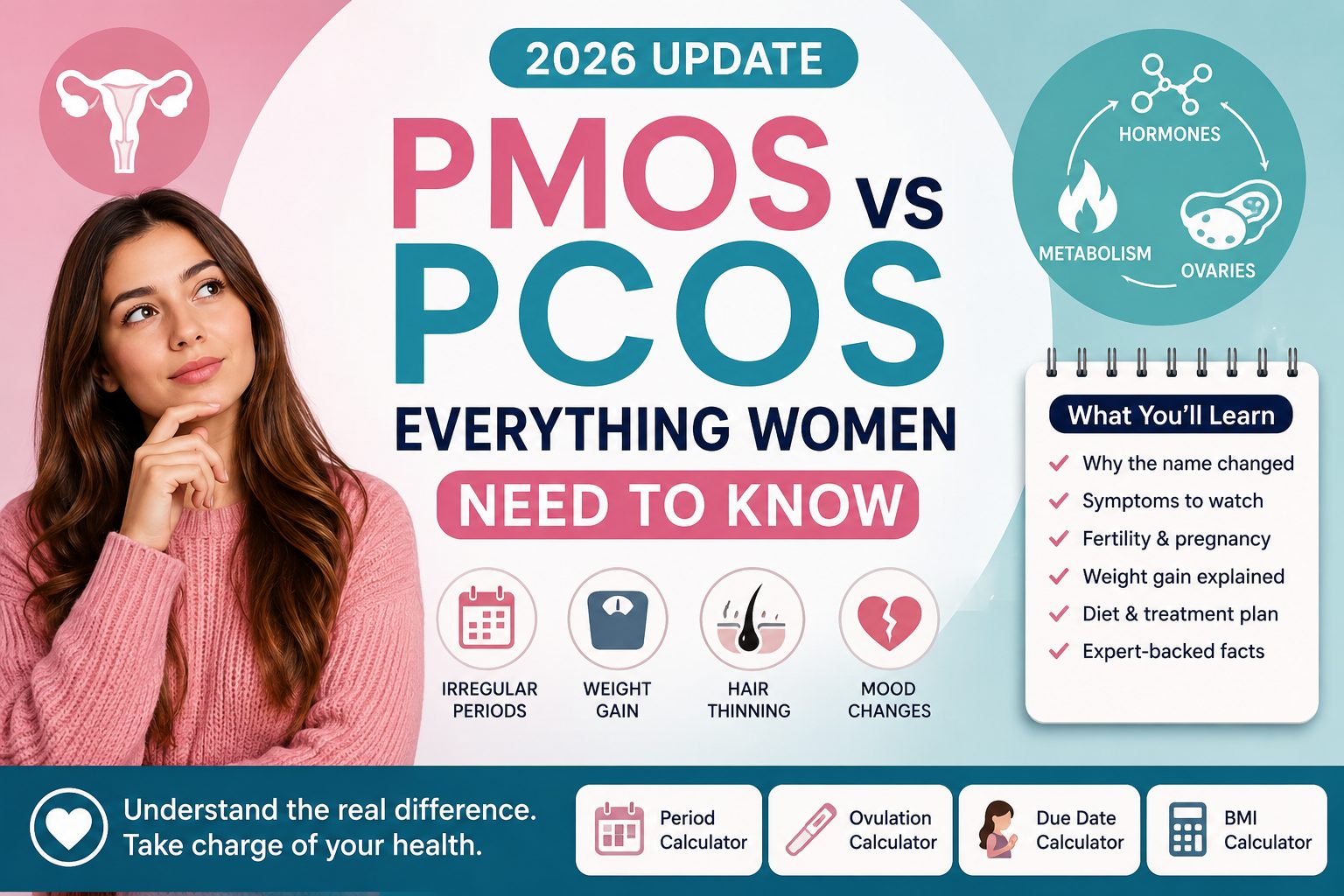
If you've searched "PMOS vs PCOS" recently, you're not imagining things — this is genuinely new terminology, not a typo or a rebrand cooked up for clicks. In May 2026, a decade-long global research effort renamed polycystic ovary syndrome (PCOS) to polyendocrine metabolic ovarian syndrome, or PMOS. Same condition, same biology, more accurate name. We covered the full story of why that change happened in our deep dive on the 2026 renaming — this guide is the one to bookmark for everything else: symptoms, causes, diagnosis, fertility, weight gain, diet, and treatment, all in one place.
Whether you were just diagnosed, have lived with PCOS for years, or are simply trying to figure out why your cycle has never quite made sense, my goal here is to walk through this calmly and clearly — the way I would with a patient sitting across from me, not a wall of medical jargon.
📋 In This Article
PMOS vs PCOS at a Glance
The most important thing to understand up front: PMOS and PCOS are the same diagnosis. If you were told you have PCOS at any point, you have PMOS — nothing about your bloodwork, your ultrasound, or your treatment plan changes just because of the new name.
| Category | PCOS | PMOS |
|---|---|---|
| Definition | Polycystic ovary syndrome | Polyendocrine metabolic ovarian syndrome |
| Diagnostic criteria | Rotterdam criteria (2 of 3 features) | Same Rotterdam criteria — unchanged |
| Core hormones involved | Elevated androgens, insulin resistance | Identical — androgens, insulin, and neuroendocrine signals |
| Metabolic component | Present, but under-emphasized by the name | Explicitly named and central to care |
| Diagnosis process | Bloodwork, ultrasound, history | Identical process |
| Treatment | Lifestyle, medication, fertility support | Identical treatment options |
| Fertility impact | Irregular ovulation-related infertility | Same impact, same treatability |
| Weight gain | Common, driven by insulin resistance | Same mechanism |
| Long-term risks | Type 2 diabetes, cardiovascular disease | Same risks — now more visible in the name itself |
In other words: the science hasn't shifted overnight. What's shifted is the label doctors and researchers now use to describe it, and hopefully, how quickly women get diagnosed going forward.
PMOS Symptoms, Explained
PMOS symptoms vary enormously from woman to woman — some people have one or two mild signs, others have nearly the full list. Here's what each one actually looks like day to day.
Irregular Periods
Cycles longer than 35 days, periods that skip months, or bleeding that's unpredictable in timing and flow are usually the first clue. This happens because ovulation isn't occurring consistently, which throws off the hormonal signals that trigger a period.
Acne
Elevated androgens push the skin's oil glands into overdrive, often producing breakouts along the jawline and chin that don't respond well to typical over-the-counter treatments.
Excess Hair Growth (Hirsutism)
Coarser, darker hair on the chin, upper lip, chest, or abdomen is common and driven by the same androgen excess behind the acne. It's one of the symptoms women report feeling most self-conscious about.
Scalp Hair Thinning
While facial and body hair can increase, scalp hair often does the opposite — usually showing up as a widening part or gradual thinning rather than sudden bald patches.
Weight Gain
Many women notice weight settling around the midsection even without major changes to diet or activity. We'll unpack exactly why this happens in its own section below.
Fertility Difficulties
Irregular or absent ovulation means fewer chances to conceive each cycle — one of the most common reasons women end up seeking a diagnosis in the first place.
Mood Changes
Anxiety, irritability, and low mood show up often, driven by both hormonal shifts and the emotional toll of visible symptoms. This deserves real attention, not just the physical side of things.
Fatigue and Sleep Problems
Insulin resistance and hormonal fluctuations can leave energy levels inconsistent, and sleep apnea is more common in women with PMOS, particularly alongside weight changes.
Skin Changes
Beyond acne, some women notice darkened patches of skin (acanthosis nigricans) around the neck or underarms — a visible sign of insulin resistance worth mentioning to your doctor.
🧬 Good to know: Not every woman with PMOS carries extra weight. "Lean PMOS" is real, and the same hormonal picture can exist at a completely typical body weight.
What Causes PMOS?
There isn't one single cause — PMOS develops from a mix of factors working together:
- Insulin resistance: Affects a large share of women with PMOS. When cells stop responding well to insulin, the body produces more of it, and high insulin levels push the ovaries to make extra androgens.
- Genetics: PMOS tends to run in families, and researchers believe multiple genes contribute rather than a single one.
- Chronic low-grade inflammation: Often present alongside elevated androgens and may reinforce the cycle.
- Neuroendocrine signaling: Hormone communication from the brain to the ovaries appears to play a bigger role than researchers once assumed — part of why "polyendocrine" made it into the new name.
- Lifestyle factors: Diet, activity level, sleep, and stress don't cause PMOS on their own, but they can meaningfully worsen or ease symptoms.
How PMOS Is Diagnosed
Diagnosis still relies on the Rotterdam criteria, requiring at least two of these three features:
- Irregular or absent ovulation (reflected by irregular periods)
- Clinical or bloodwork evidence of excess androgens
- Polycystic-appearing ovaries on ultrasound
A typical workup includes bloodwork for testosterone, DHEAS, LH, FSH, thyroid function, fasting insulin, and glucose, along with a pelvic ultrasound. Your doctor will also rule out look-alike conditions such as thyroid disorders or elevated prolactin. Anyone with irregular periods, unexplained acne or hair changes, or difficulty conceiving is a reasonable candidate for testing — a primary care doctor, gynecologist, or endocrinologist can all get the process started.
PMOS and Fertility
PMOS is one of the most common causes of ovulation-related infertility, but it's also one of the most treatable. Fewer ovulations per year means fewer chances to conceive, though most women with PMOS who want to get pregnant do — with the right support.
- Lifestyle changes first: A modest 5–10% reduction in body weight can restore ovulation in women who are overweight.
- Ovulation induction medication: Letrozole is typically tried first, with clomiphene citrate as another option.
- Metformin: Sometimes added to improve insulin sensitivity and cycle regularity.
- IUI or IVF: Well-established next steps when medication alone isn't enough, with solid success rates for women with PMOS.
There's a small silver lining worth knowing: women with PMOS often have a higher ovarian reserve than average, which fertility specialists can work with carefully during treatment.
🌸 Track Your Cycle
Use our free Irregular Period Checker and Ovulation Calculator to get a clearer picture of your patterns.
Check My Cycle →Why PMOS Causes Weight Gain
Insulin resistance is usually the main driver. When cells resist insulin's signal, the pancreas compensates by producing more of it — and high circulating insulin promotes fat storage, particularly around the abdomen, while also making weight loss feel harder than it "should" be.
The encouraging part: even modest, sustainable weight loss (around 5–10% of body weight) can meaningfully improve insulin sensitivity, ovulation, and androgen-related symptoms. This isn't about chasing a specific number — it's about giving your hormones room to rebalance. Progress is often slower than with typical weight loss, and that's expected, not a sign that something isn't working. If you're also managing disordered eating patterns or feel your relationship with food has become stressful, it's worth raising that directly with your doctor rather than tackling weight alone.
The Best Diet for PMOS
Because insulin resistance sits at the center of PMOS for most women, eating in a way that stabilizes blood sugar is one of the highest-impact changes available — often more effective than any single medication.
Foods to Eat
- Whole grains like oats, quinoa, and brown rice
- Leafy greens and non-starchy vegetables
- Lean proteins — chicken, fish, eggs, beans, lentils
- Fatty fish like salmon, rich in anti-inflammatory omega-3s
- Nuts, seeds, and olive oil for healthy fats
- Berries and other lower-sugar fruits
Foods to Limit
- Refined carbohydrates — white bread, pastries, sugary cereals
- Sugary drinks and sodas
- Heavily processed and fried foods
- Excess red and processed meat
- Alcohol in excess
A Sample Day
Breakfast: eggs with spinach and whole-grain toast. Lunch: grilled chicken or lentil salad with olive oil dressing. Snack: Greek yogurt with berries and a handful of nuts. Dinner: baked salmon, roasted vegetables, and quinoa. Hydration matters too — aim for consistent water intake through the day rather than relying on sugary drinks for energy.
None of this needs to be an all-or-nothing overhaul. Most women see real improvement by gradually shifting the balance of their plate toward whole foods rather than eliminating anything completely. Pairing dietary changes with regular movement — a mix of cardio and strength training, roughly 150 minutes a week — tends to produce the best results for insulin sensitivity.
PMOS Treatment Options
Treatment hasn't changed because of the name update — the same evidence-based approaches that worked for PCOS continue to work for PMOS.
- Combined oral contraceptives: Regulate periods and lower androgens; not used if you're trying to conceive.
- Metformin: Improves insulin sensitivity and often helps regulate cycles over time.
- Spironolactone: Reduces hirsutism and acne; requires reliable contraception.
- Letrozole or clomiphene: Used to induce ovulation when pregnancy is the goal.
- Inositol supplements: Some evidence supports myo-inositol for improving insulin sensitivity and cycle regularity, though it works best alongside — not instead of — lifestyle changes and medical care.
Mental health support deserves equal billing here. Research consistently shows higher rates of anxiety and depression among women with PMOS, and cognitive behavioral therapy (CBT) has solid evidence behind it for the mood symptoms that often accompany the condition. Managing PMOS well means treating it as the whole-body condition it is — not just the reproductive piece.
Myths vs Facts
Frequently Asked Questions
Conclusion
PMOS can feel like a lot to take in — a new name for a condition you may have been managing for years, layered on top of symptoms that already touch your skin, your cycle, your weight, and your mood. But the core message is simple: the biology hasn't changed, the treatments that have always worked still work, and you have more options than it might feel like some days.
If anything here felt familiar, the most useful next step is a conversation with your doctor about testing, treatment, or simply getting a second opinion. And if you're further along in your PMOS journey already, our tools below can help you track your cycle and stay on top of the day-to-day.
🌸 More Free Tools
Ovulation Calculator, Period Tracker, Pregnancy Due Date Calculator, and BMI Calculator — all free, no signup.
Explore All Tools →Related reading: Why PCOS Was Renamed to PMOS · PCOS Symptoms, Causes & Management · How to Lose Weight with PCOS Naturally · GLP-1 Drugs & PCOS/PMOS Fertility
Further reading from health authorities
General topic pages from authoritative organizations for further reading. They are suggested resources and are not a line-by-line citation of the statements in this article. Always confirm personal medical decisions with a healthcare professional.