📋 In This Article
Why This Matters
You know the feeling. One week you're powering through your to-do list, hitting the gym, and feeling unstoppable. Two weeks later you can barely get off the couch by 4 p.m., even though you slept the same eight hours and ate the same breakfast. If you've ever wondered whether you're just "lazy" some weeks, here's the truth: you're not. Your menstrual cycle and energy levels are directly linked, and the shift you're feeling has a hormonal explanation behind it.
For decades, women were told to push through fatigue as if every day should feel the same. But your body isn't running on a flat, steady schedule — it's running on a roughly month-long hormonal cycle that changes how your brain, muscles, and metabolism perform from week to week. Understanding this rhythm isn't about making excuses. It's about working with your biology instead of constantly fighting it.
Quick Summary
- Energy naturally dips during the menstrual phase and often peaks around ovulation.
- Estrogen and progesterone are the two hormones most responsible for the shift.
- The follicular phase (after your period) is typically when energy and motivation climb steadily.
- The luteal phase (the week or two before your period) is when fatigue, cravings, and lower mood are most common.
- Matching your workouts and workload to your current phase can reduce burnout and improve results.
- Persistent, severe fatigue is not something you have to just accept — it can signal an underlying issue worth checking.
- Tracking your cycle is the simplest way to start noticing your own personal energy pattern.
The Hormones Behind the Energy Shift
Two hormones drive most of what you feel across the month: estrogen and progesterone. Both are produced by the ovaries, and their levels rise and fall in a predictable pattern that also influences serotonin, cortisol, and even body temperature.
Estrogen tends to have an energizing, mood-lifting effect. It supports serotonin production, sharpens focus, and can even improve exercise performance. Progesterone, on the other hand, has a calming, slightly sedative effect — helpful for winding down at night, but it's also part of why the week before your period can feel foggier and more tiring.
When estrogen is rising, you'll often feel it as clarity and motivation. When progesterone dominates and estrogen drops off, fatigue, irritability, and lower stamina become far more common. This isn't a flaw in your body — it's simply how reproductive hormones are designed to behave.
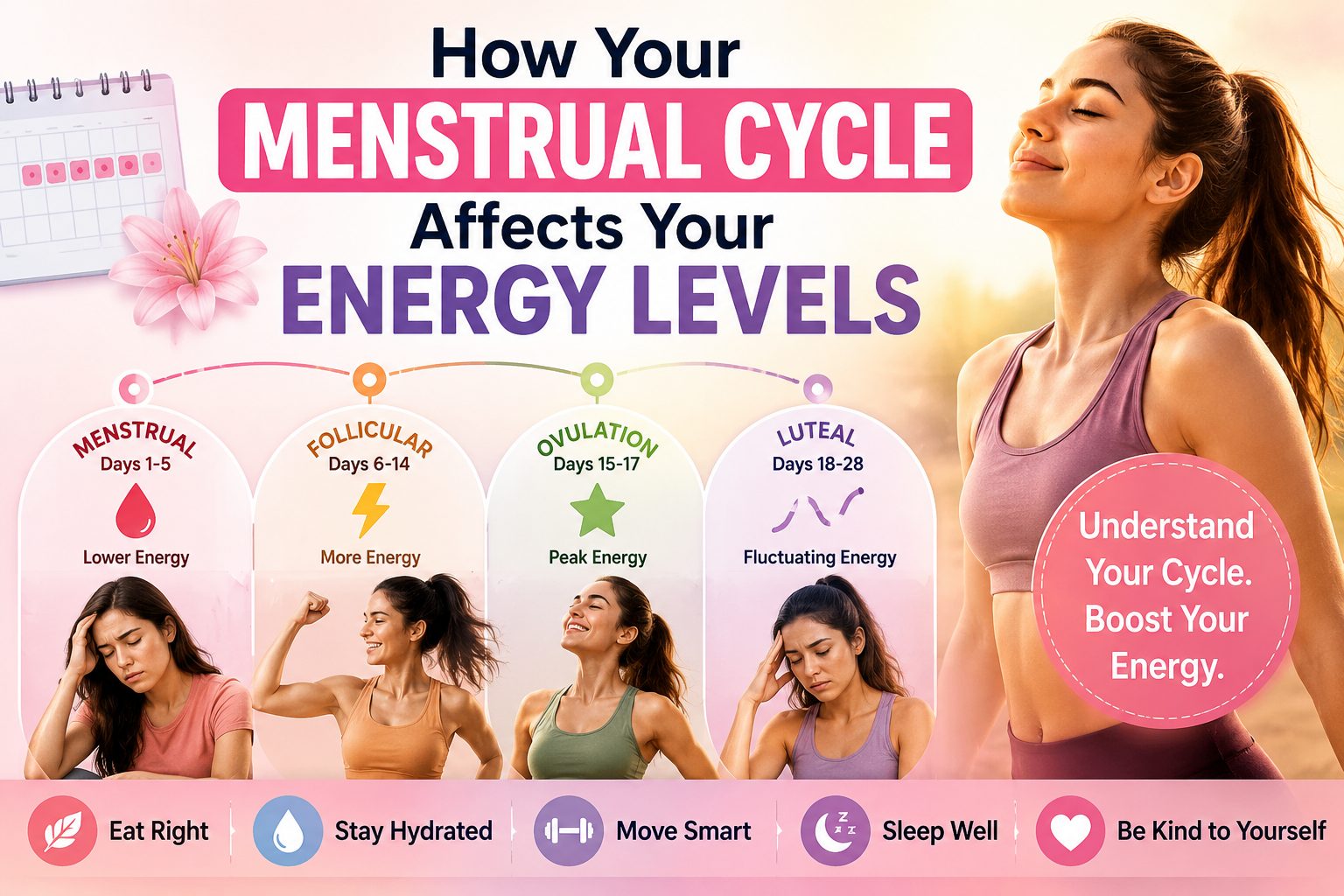
Menstrual Phase (Days 1–5): Lower Energy
This is your body's most literal "low battery" phase. Blood loss combined with the hormone drop can leave you feeling drained, and it's completely normal to want to slow down. This is a good time to prioritize rest rather than push for peak performance.
Follicular Phase (Days 6–14): More Energy
As estrogen rises through this phase, many women notice sharper thinking and a genuine boost in physical capacity. This is often the best window in the month to tackle demanding tasks or ramp up training intensity.
Ovulation Phase (Days 15–17): Peak Energy
Around ovulation, many women describe feeling their most capable and outgoing. Strength and endurance often peak here too, which is one reason athletes and coaches increasingly plan competitions and heavy lifting days around this window.
Luteal Phase (Days 18–28): Fluctuating Energy
This is the phase most women associate with feeling "off." The hormone drop at the end of the luteal phase is linked to lower serotonin, which explains why mood, sleep quality, and motivation can all take a hit in the days right before your period starts.
Pro Tip: Try logging your energy level (1–10) daily for two to three cycles alongside our Period Tracker. Most women start seeing their personal pattern within 60–90 days.
Best Workouts for Each Phase
| Phase | Recommended Workouts | Why It Works |
|---|---|---|
| Menstrual | Walking, gentle yoga, stretching | Lower hormone levels mean lower stamina; gentle movement supports circulation without draining you further. |
| Follicular | Strength training, HIIT, new classes | Rising estrogen supports faster recovery and higher pain tolerance. |
| Ovulation | Heavy lifting, sprints, competitions | Peak estrogen and a brief testosterone rise often mean peak strength and power output. |
| Luteal | Moderate cardio, pilates, lighter strength work | Rising progesterone raises core body temperature and can reduce endurance late in this phase. |
Productivity Tips by Phase
- Menstrual phase: Batch low-energy admin tasks; avoid scheduling big presentations if you can help it.
- Follicular phase: This is prime time for brainstorming, learning new skills, and starting projects.
- Ovulation: Use this window for negotiations, interviews, or anything requiring confidence and quick thinking.
- Luteal phase: Focus on finishing and refining rather than starting; build in extra buffer time near the end of this phase.
Did You Know? Some workplaces and universities are beginning to experiment with "cycle-aware" scheduling, allowing more flexibility during the luteal and menstrual phases based on emerging research on hormonal fatigue.
Sleep and Recovery
Sleep quality shifts across the cycle too. Progesterone has a mild sedative effect, which can make you feel sleepier in the luteal phase, yet paradoxically many women sleep worse in the days right before their period due to rising body temperature and hormone withdrawal.
- Keep your bedroom slightly cooler in the week before your period, since core body temperature rises during the luteal phase.
- Prioritize a consistent wind-down routine during the luteal phase, when sleep disruption is most common.
- Use the higher-energy follicular phase to catch up on anything you missed, rather than relying on caffeine to compensate.
Nutrition by Phase
| Phase | Helpful Foods | Focus |
|---|---|---|
| Menstrual | Iron-rich foods (spinach, lentils, lean red meat), water | Replenish iron lost through bleeding; stay hydrated to ease cramps. |
| Follicular | Lean protein, fermented foods, colorful vegetables | Support rising estrogen metabolism and gut health. |
| Ovulation | Fiber-rich foods, healthy fats, antioxidants | Support hormone clearance and reduce inflammation. |
| Luteal | Complex carbs, magnesium-rich foods, calcium | Ease cravings, support mood, and reduce PMS symptoms. |
Cravings during the luteal phase are real and hormonally driven, not a lack of willpower. Leaning into complex carbohydrates like oats, sweet potatoes, and whole grains — rather than restricting entirely — tends to work better than fighting the craving outright.
Signs Something Isn't Normal
Some fatigue and mood shift across the cycle is expected. But certain patterns suggest something more is going on:
- Fatigue so severe it interferes with daily functioning, every single cycle.
- Extremely heavy periods (soaking through a pad or tampon every hour) alongside exhaustion — this can point to iron-deficiency anemia.
- Mood symptoms severe enough to disrupt relationships or work, which may indicate PMDD rather than typical PMS.
- Energy crashes that don't follow any cyclical pattern at all, which may point to a cause unrelated to your cycle, like thyroid dysfunction.
When to See a Doctor
Talk to your healthcare provider if fatigue is severe, unrelenting, or paired with other symptoms like unusually heavy bleeding, dizziness, hair loss, or mood changes that feel unmanageable. According to the American College of Obstetricians and Gynecologists (ACOG), persistent, severe premenstrual symptoms that interfere with daily life may indicate premenstrual dysphoric disorder (PMDD), which is treatable. Ruling out anemia, thyroid conditions, and PCOS is also reasonable if fatigue feels disproportionate to your cycle.
Myths vs Facts
Scientific Evidence
Research on the menstrual cycle and physical performance has grown substantially in recent years. Studies published through the National Institutes of Health (NIH) have documented that estrogen fluctuations influence serotonin and dopamine pathways, which affect mood and perceived energy. Sleep research has also linked rising progesterone to increased core body temperature, which can fragment sleep in the late luteal phase. While individual responses vary, the overall hormonal pattern is well established in reproductive endocrinology literature.
🩸 Track Your Own Pattern
Use our free Period Tracker and Ovulation Calculator to map your personal energy pattern over the next few cycles.
Explore All Tools →Frequently Asked Questions
Conclusion
Your energy was never random — it's been following your hormones all along. Once you start noticing which phase you're in, the "why am I so tired today" question tends to answer itself. Use the lower-energy days to rest without guilt, and lean into the follicular and ovulation phases when your body is naturally ready to go harder. Small adjustments like these, made consistently, add up to a lot less fighting against your own biology.
📖 Related Articles
📚 Medical References
- American College of Obstetricians and Gynecologists (ACOG) — Premenstrual Syndrome (PMS)
- National Institutes of Health (NIH) — Menstrual Cycle and Hormone Regulation
- World Health Organization (WHO) — Sexual and Reproductive Health
- Centers for Disease Control and Prevention (CDC) — Iron Deficiency and Menstrual Health
🌸 More Free Cycle Tools
Explore our Period Tracker, Ovulation Calculator, Cycle Length Calculator, and PMS Calculator — all free and instant.
Explore All Tools →Further reading from health authorities
General topic pages from authoritative organizations for further reading. They are suggested resources and are not a line-by-line citation of the statements in this article. Always confirm personal medical decisions with a healthcare professional.