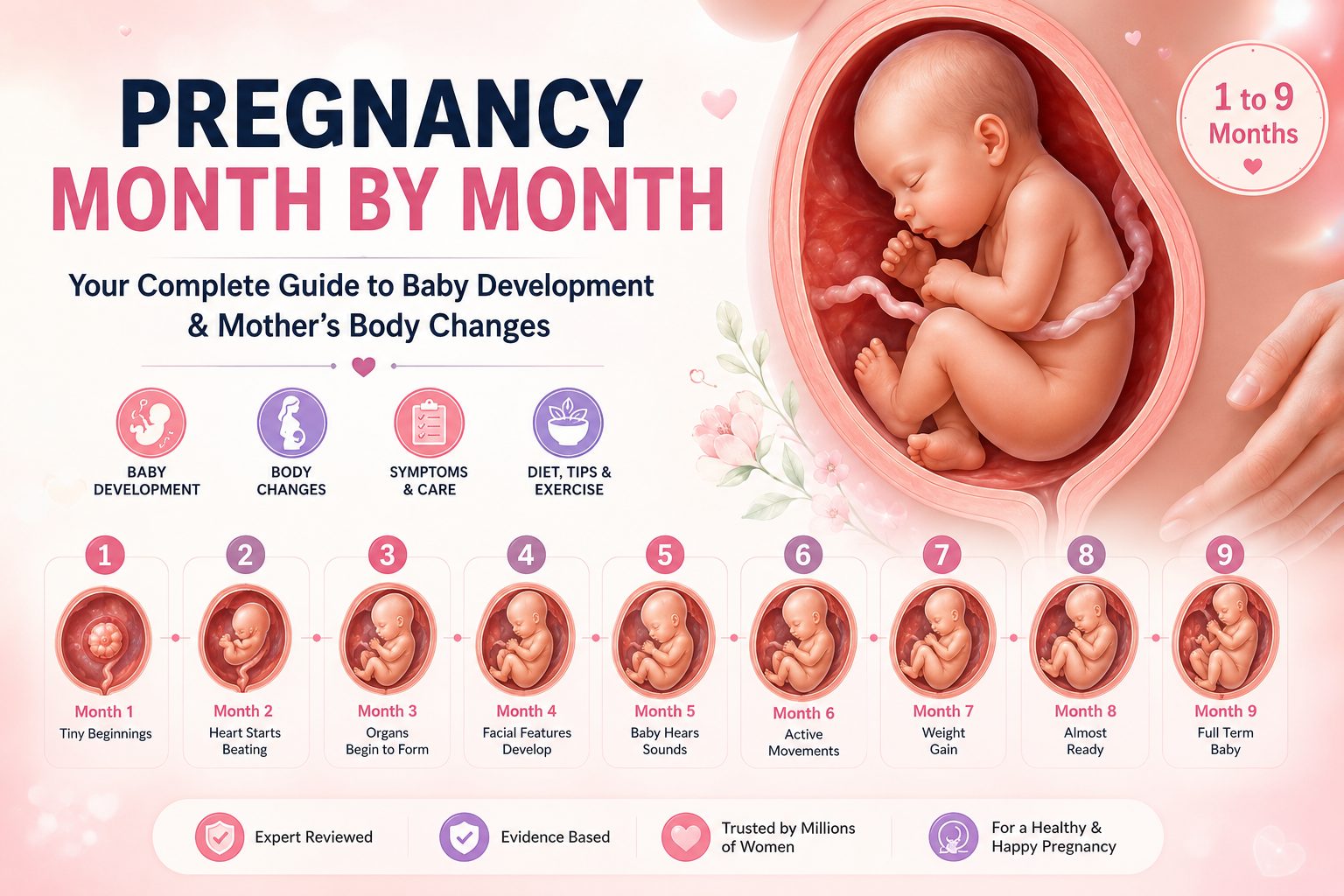
Forty weeks. Nine months. One rapidly changing body building an entirely new human being from scratch. If you're pregnant right now — or hoping to be soon — it helps enormously to know what's actually happening inside you, month by month, instead of just counting down days on an app. This pregnancy month by month guide walks through fetal development, your own body's changes, common symptoms, nutrition, safe exercise, and the medical checkups that keep both of you healthy, from conception to delivery.
Every pregnancy is different, and the ranges below describe what's typical — not a strict checklist your body has to match. Use this as a companion to your prenatal visits, not a replacement for them.
"Pregnancy isn't 9 months of waiting — it's 9 months of your body doing the most complex engineering project it will ever undertake."
How Pregnancy Begins
Before month one even starts on a calendar, several precise biological events have to happen in sequence.
Fertilization
Fertilization occurs when a single sperm penetrates a mature egg, usually within 12–24 hours of ovulation, typically in the fallopian tube. The fertilized egg is now called a zygote and carries a full set of 46 chromosomes — 23 from each parent — that determine everything from eye color to blood type.
Implantation
Over the next 3–4 days, the zygote divides repeatedly as it travels down the fallopian tube toward the uterus. Around day 6–10 after fertilization, it burrows into the thickened uterine lining (endometrium) in a process called implantation. Some women notice light implantation spotting around this time, though many notice nothing at all.
Blastocyst
By the time it implants, the cluster of cells has organized itself into a blastocyst — an outer layer that will become the placenta and membranes, and an inner cell mass that will become the embryo itself. This is the structure your body first recognizes as pregnancy, triggering the hormone hCG that home pregnancy tests detect.
Placenta Formation
Once implanted, specialized cells begin building the placenta — a temporary organ that will deliver oxygen and nutrients, remove waste, and produce essential pregnancy hormones for the next nine months. The placenta isn't fully functional until around week 10–12, which is part of why early pregnancy relies heavily on the corpus luteum (a structure in the ovary) to support hormone levels.
Exercise TipsContinue your normal activity level unless advised otherwise.
Medical CheckupsConfirm pregnancy with a blood or urine test; book your first prenatal visit.
Do's & Don'tsDo start prenatal vitamins. Don't smoke, drink, or take unapproved medications.
Pregnancy Month 2 (Weeks 5–8)
💓 Heart Starts Beating
Baby DevelopmentThe heart begins beating around week 6; arm and leg buds, and facial features start forming.
Baby SizeAbout the size of a raspberry (roughly 0.5 inch).
Mother's BodyUterus begins to enlarge; breasts feel fuller and more tender.
Common SymptomsMorning sickness, fatigue, frequent urination, food aversions often begin.
Recommended DietSmall, frequent meals help nausea; ginger tea and bland carbs can soothe morning sickness.
Exercise TipsGentle walking or prenatal yoga if energy allows; rest when you need to.
Medical CheckupsFirst prenatal visit, blood work, and dating ultrasound may occur.
Do's & Don'tsDo stay hydrated. Don't skip meals entirely even with nausea — try crackers first thing.
Pregnancy Month 3 (Weeks 9–13)
🫀 Organs Begin to Form
Baby DevelopmentMajor organs, fingers, toes, and external genitals begin forming; reflexes appear.
Baby SizeAbout the size of a plum (roughly 3 inches, 0.5–0.7 oz).
Mother's BodyPlacenta takes over hormone production; first trimester fatigue often starts easing.
Common SymptomsNausea may peak or start improving; bloating and mild cramping are common.
Recommended DietAdd lean protein, dairy, and iron-rich foods as appetite returns.
Exercise TipsLow-impact cardio (walking, swimming) 20–30 minutes most days if cleared by your provider.
Medical CheckupsNIPT or first-trimester screening for chromosomal conditions may be offered.
Do's & Don'tsDo share pregnancy news at your own pace. Don't ignore severe or worsening abdominal pain.
Pregnancy Month 4 (Weeks 14–17)
🙂 Facial Features Develop
Baby DevelopmentFacial features sharpen, the skeleton hardens, and baby can make sucking motions.
Baby SizeAbout the size of an avocado (roughly 5 inches, 3 oz).
Mother's BodyThe "baby bump" starts becoming visible; second trimester energy boost often begins.
Common SymptomsNausea usually fades; nasal congestion, mild dizziness, and increased appetite appear.
Recommended DietIncrease calcium and vitamin D for bone development; continue iron and folic acid.
Exercise TipsPrenatal strength training and walking are excellent; avoid lying flat on your back for long periods.
Medical CheckupsRoutine visit; blood pressure, weight, and fundal height checks begin regularly.
Do's & Don'tsDo wear supportive, comfortable clothing. Don't ignore sudden vision changes or severe headaches.
Pregnancy Month 5 (Weeks 18–22)
👂 Baby Hears Sounds
Baby DevelopmentBaby can now hear sounds, and you may start feeling first movements (quickening).
Baby SizeAbout the size of a banana (roughly 6.5 inches, 10.5 oz).
Mother's BodyBelly grows noticeably; skin may stretch, sometimes causing mild itching.
Common SymptomsRound ligament pain, backache, and mild swelling in feet can begin.
Recommended DietBoost fiber and fluids to ease constipation; include omega-3s for brain development.
Exercise TipsPelvic floor (Kegel) exercises and prenatal yoga support posture and delivery prep.
Medical CheckupsAnatomy scan ultrasound (around week 18–20) checks organ development in detail.
Do's & Don'tsDo sleep on your side with a pillow for support. Don't skip the anatomy scan appointment.
Pregnancy Month 6 (Weeks 23–27)
🤸 Active Movements
Baby DevelopmentBaby's movements become stronger; lungs continue developing surfactant for future breathing.
Baby SizeAbout the size of an ear of corn (roughly 12 inches, 1.5 lb).
Mother's BodyBraxton Hicks (practice) contractions may begin; stretch marks can appear.
Common SymptomsLeg cramps, mild swelling, and occasional shortness of breath are common.
Recommended DietWatch added sugar; this is when gestational diabetes screening approaches.
Exercise TipsContinue low-impact activity; stretch calves before bed to reduce cramping.
Medical CheckupsGlucose screening test for gestational diabetes typically occurs around week 24–28.
Do's & Don'tsDo track baby's movement patterns. Don't ignore persistent, painful swelling in one leg only.
Pregnancy Month 7 (Weeks 28–31)
⚖️ Weight Gain
Baby DevelopmentBaby opens and closes eyes, gains body fat rapidly, and responds to light and sound.
Baby SizeAbout the size of a butternut squash (roughly 14.5 inches, 2.5 lb).
Mother's BodyThird trimester begins; weight gain accelerates and the belly is prominent.
Common SymptomsBackache, heartburn, trouble sleeping, and Braxton Hicks contractions increase.
Recommended DietSmaller, more frequent meals help heartburn; keep iron intake steady.
Exercise TipsGentle walking and stretching; avoid exercises that risk falling or abdominal trauma.
Medical CheckupsPrenatal visits become every 2 weeks; Tdap and RhoGAM (if Rh-negative) may be given.
Do's & Don'tsDo start thinking about your birth plan. Don't ignore reduced fetal movement — call your provider.
Pregnancy Month 8 (Weeks 32–35)
🍼 Almost Ready
Baby DevelopmentBones finish hardening (except the skull); baby often turns head-down in preparation.
Baby SizeAbout the size of a pineapple (roughly 18 inches, 5 lb).
Mother's BodyIncreased pressure on the bladder and lungs; fatigue and swelling often peak.
Common SymptomsFrequent urination, shortness of breath, insomnia, and pelvic pressure are typical.
Recommended DietContinue balanced meals; keep protein and hydration high for energy.
Exercise TipsGentle walking and hip-opening stretches can help prepare the body for labor.
Medical CheckupsWeekly or biweekly visits; Group B strep test typically done around week 36–37.
Do's & Don'tsDo pack your hospital bag. Don't travel far from your delivery hospital without a plan.
Pregnancy Month 9 (Weeks 36–40)
🎀 Full-Term Baby
Baby DevelopmentBaby is considered full-term at 39 weeks; organs mature and baby gains final weight.
Baby SizeAbout the size of a small pumpkin (roughly 19–20 inches, 7–8 lb average).
Mother's BodyBaby "drops" lower into the pelvis (lightening); cervix begins to soften and dilate.
Common SymptomsStronger, more frequent contractions, pelvic pressure, and nesting instinct are common.
Recommended DietLight, easy-to-digest meals; stay hydrated for labor readiness.
Exercise TipsShort walks can support labor progress; rest whenever your body asks for it.
Medical CheckupsWeekly visits, cervical checks, and non-stress tests as your due date nears.
Do's & Don'tsDo learn true labor signs. Don't hesitate to call your provider with any concern, day or night.
🌸 Remember: Only about 5% of babies arrive on their exact due date. Full-term is 39–40 weeks, and anywhere from 37–42 weeks is considered within normal range.
Pregnancy Trimester Overview
Pregnancy is traditionally divided into three trimesters, each with a distinct focus for both baby's development and your own care.
Trimester
Weeks
Focus
First Trimester
Weeks 1–13
Organ formation, highest risk period, morning sickness, first prenatal visit
Second Trimester
Weeks 14–27
Often called the "golden period" — energy returns, anatomy scan, first movements felt
Third Trimester
Weeks 28–40
Rapid weight gain, frequent checkups, labor preparation and delivery
Baby Size Comparison by Month
Month
Fruit/Object Comparison
Approx. Length
Month 1
Poppy seed
Under 0.25 in
Month 2
Raspberry
~0.5 in
Month 3
Plum
~3 in
Month 4
Avocado
~5 in
Month 5
Banana
~6.5 in
Month 6
Ear of corn
~12 in
Month 7
Butternut squash
~14.5 in
Month 8
Pineapple
~18 in
Month 9
Small pumpkin
~19–20 in
Mother's Body Changes Throughout Pregnancy
Your body undergoes remarkable adaptations to support a growing baby. Blood volume increases by up to 50% to supply the placenta. The uterus expands from the size of a small pear to filling most of the abdominal cavity. Ligaments loosen under the hormone relaxin to prepare the pelvis for delivery, which is also why balance and joint stability can feel different in later months. Skin changes — including a dark line on the belly (linea nigra), stretch marks, and pregnancy glow from increased blood flow — are all common and typically fade after delivery.
Pregnancy Symptoms Month by Month
Stage
Common Symptoms
Months 1–3
Missed period, nausea, fatigue, breast tenderness, frequent urination
Months 4–6
Increased appetite, visible bump, first movements, backache, mild swelling
A balanced pregnancy diet supports both your energy needs and your baby's development. Focus on:
Folic acid (400–800mcg): Reduces risk of neural tube defects — most critical in the earliest weeks.
Iron: Supports increased blood volume; found in lean meat, spinach, and legumes.
Calcium & Vitamin D: Support baby's developing bones and teeth.
Protein: Needed in higher amounts, especially in the second and third trimesters.
Omega-3 fatty acids (DHA): Support brain and eye development.
Hydration: Aim for 8–10 glasses of water daily to support increased blood volume and amniotic fluid.
Avoid raw or undercooked meat and eggs, unpasteurized dairy, high-mercury fish (like swordfish and king mackerel), excess caffeine, and alcohol entirely.
🥗 Not Sure What's Safe to Eat?
Check our complete guide to safe and unsafe foods during pregnancy before your next meal.
Staying active during a healthy, low-risk pregnancy supports better sleep, mood, and labor preparation. Generally safe options include walking, swimming, stationary cycling, prenatal yoga, and light strength training with proper form. Avoid contact sports, activities with fall risk, hot yoga, and exercises that involve lying flat on your back after the first trimester. Always get personalized clearance from your provider, especially with any pregnancy complications.
Medical Tests Timeline
Weeks
Test / Checkup
Weeks 8–10
First prenatal visit, blood work, dating ultrasound
Weeks 10–13
First-trimester screening / NIPT (optional)
Weeks 18–20
Anatomy scan ultrasound
Weeks 24–28
Glucose screening for gestational diabetes
Weeks 28
Tdap vaccine, RhoGAM if Rh-negative
Weeks 36–37
Group B strep test
Weeks 36–40
Weekly checkups, cervical checks, non-stress tests as needed
Warning Signs: When to Contact a Doctor
Contact your provider immediately if you experience any of the following:
Heavy vaginal bleeding or persistent spotting
Severe abdominal or pelvic pain
Severe headache with vision changes (possible preeclampsia)
Sudden swelling of the face, hands, or one leg specifically
Reduced or absent fetal movement after your baby has established a movement pattern
Fever above 100.4°F, or fluid leaking before your due date
Contractions before 37 weeks that are regular and increasing in intensity
Pregnancy Tips for a Healthy 9 Months
Attend every scheduled prenatal appointment — even when you feel completely fine.
Track baby's movements daily once you begin feeling them consistently.
Sleep on your side (left side preferred) during the second and third trimesters.
Ask questions — no concern is too small to raise with your provider.
Prioritize rest and accept help from family and friends.
Prepare a simple birth plan, while staying flexible about how delivery may unfold.
🤰 Know Your Exact Due Date
Use our free Pregnancy Due Date Calculator to find your estimated delivery date in seconds.
A full-term pregnancy is typically 9 months, or 40 weeks, counted from the first day of your last menstrual period. Full-term delivery is considered to be between 39 and 40 weeks, though 37–42 weeks is within normal range.
When does the baby's heart start beating?
The heart typically begins beating around week 6 of pregnancy, and it can often be detected on an early ultrasound around that time.
When will I start feeling the baby move?
Most women feel first movements (quickening) between weeks 18–22, though first-time mothers may not notice it until closer to 22–24 weeks.
What is the difference between gestational age and fetal age?
Gestational age is counted from your last menstrual period, which is what doctors use. Fetal age is counted from actual conception, about two weeks later. Both are correct — they just measure from different starting points.
Which trimester is the hardest?
This varies by person. The first trimester often brings nausea and fatigue, while the third trimester brings physical discomfort from size and weight. Many women find the second trimester the most comfortable.
When does the baby bump usually show?
Most women start showing a visible bump between 12–16 weeks, though this varies based on body type and whether it's a first pregnancy.
Is it safe to exercise every month of pregnancy?
For most low-risk pregnancies, moderate exercise is safe and beneficial throughout all 9 months, with adjustments as the pregnancy progresses. Always get individual clearance from your provider.
What foods should be avoided during pregnancy?
Avoid alcohol, raw or undercooked meat and eggs, unpasteurized dairy, high-mercury fish, and excess caffeine. See our full safe foods guide for a complete list.
How much weight should I gain during pregnancy?
Recommended weight gain depends on your pre-pregnancy BMI, but general guidelines suggest 25–35 lbs for women starting at a healthy weight. Your provider can give you a personalized target.
What is the anatomy scan and when does it happen?
The anatomy scan is a detailed ultrasound, typically performed between weeks 18–20, that examines baby's organs, spine, brain, heart, and other structures in detail.
Why do I need a glucose screening test?
The glucose screening test, done around weeks 24–28, checks for gestational diabetes, a form of high blood sugar that can develop during pregnancy and affects both mother and baby if untreated.
What is Braxton Hicks and when does it start?
Braxton Hicks are irregular "practice" contractions that can begin as early as the second trimester but are usually most noticeable in the third trimester. Unlike true labor, they don't increase steadily in intensity or frequency.
When should I go to the hospital for labor?
Common guidance is the "5-1-1 rule" — contractions 5 minutes apart, lasting 1 minute each, for at least 1 hour — but always follow your specific provider's instructions, especially if your water breaks or bleeding occurs.
Can I travel during pregnancy?
Travel is generally considered safest during the second trimester for low-risk pregnancies. Always check with your provider before travel, especially by air, and avoid travel very close to your due date.
What is quickening?
Quickening is the medical term for the first time a mother feels fetal movement, typically occurring between weeks 18–22 of pregnancy.
Is spotting normal in early pregnancy?
Light spotting can occur with implantation and is often harmless, but any bleeding in pregnancy should be reported to your provider to rule out other causes.
Conclusion
Pregnancy unfolds in a remarkable, predictable sequence — from a single fertilized cell to a fully formed baby ready to meet the world. Understanding what's happening each month, in your baby and in your own body, can turn uncertainty into confidence. Keep your prenatal appointments, listen to your body, and don't hesitate to reach out to your healthcare provider with any question along the way. You're doing an extraordinary thing.
Medical Disclaimer: This article is for informational and educational purposes only and does not constitute medical advice. Every pregnancy is unique — always consult a qualified healthcare provider regarding your individual prenatal care.
General topic pages from authoritative organizations for further reading. They are suggested resources and are not a line-by-line citation of the statements in this article. Always confirm personal medical decisions with a healthcare professional.
🍪 We use cookies and similar technologies for site preferences, analytics and advertising (including Google services). Calculator inputs are processed in your browser and are not sent to our servers. Privacy Policy