📋 In This Article
- What Are Normal Period Cramps?
- What Is Endometriosis?
- Endometriosis vs Normal Period Cramps: Key Differences
- What Does Endometriosis Pain Feel Like?
- Symptoms That May Point to Endometriosis
- When Period Pain Is Not "Normal"
- When Should You See a Doctor?
- How Endometriosis Is Diagnosed
- Treatment and Pain Management
- Endometriosis and Fertility
- Frequently Asked Questions
Almost every woman who menstruates knows some version of period cramps — that dull, achy pulling low in the belly that shows up for a day or two and then fades. So when pain shows up differently — sharper, longer, or spreading in ways that don't feel familiar — it's natural to wonder whether something else might be going on. One of the most common questions we hear is how to tell ordinary menstrual cramps apart from the kind of pain associated with endometriosis.
There's no single symptom that answers that question on its own, and that's an important thing to say upfront. But there are patterns — in timing, intensity, location, and what else comes along with the pain — that can help you figure out whether what you're feeling fits the usual picture of a period, or whether it's worth bringing to a doctor. This guide walks through both, side by side, so you have a clearer sense of where your own experience might fit.
What Are Normal Period Cramps?
The medical term for period cramps is primary dysmenorrhea, and it's caused by prostaglandins — hormone-like chemicals that trigger the uterus to contract so it can shed its lining. Higher prostaglandin levels generally mean stronger cramps, which is part of why cramp intensity varies so much from person to person and even cycle to cycle.
Typical, garden-variety period cramps tend to follow a fairly predictable pattern:
- Timing: Usually start right as bleeding begins, or up to a day before.
- Duration: Generally last 1 to 3 days, easing as the period progresses.
- Location: Centered in the lower abdomen, sometimes radiating to the lower back or upper thighs.
- Intensity: Ranges from mild to moderately uncomfortable, and usually responds well to over-the-counter pain relievers, heat, or rest.
- Impact: May slow you down for a day, but doesn't typically stop you from going to work, school, or your usual routine.
It's worth being clear that "normal" doesn't mean "always mild." Plenty of women with completely ordinary, non-endometriosis cramps still describe them as quite painful. Severity alone isn't the deciding factor — the pattern around the pain matters just as much.
What Is Endometriosis?
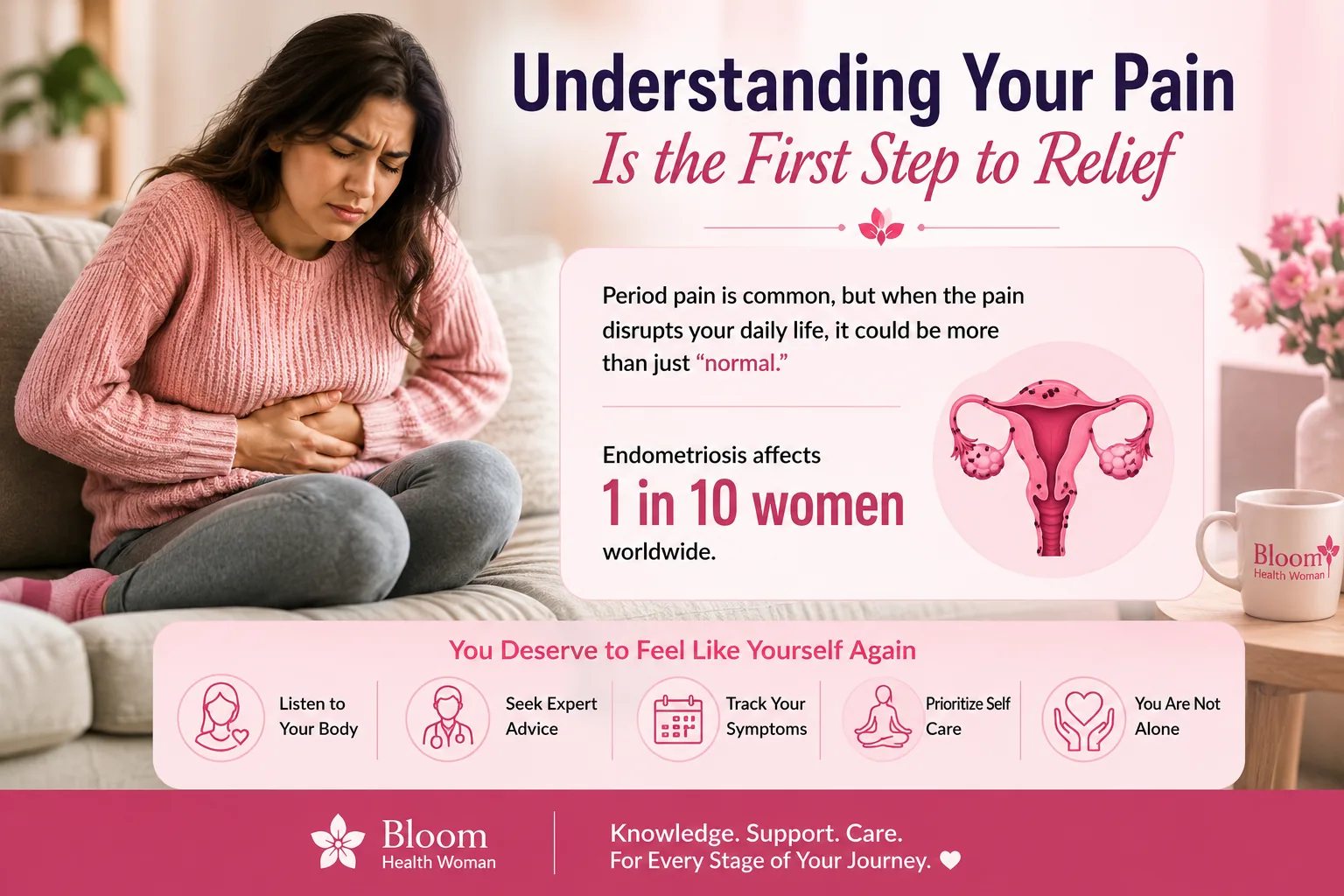
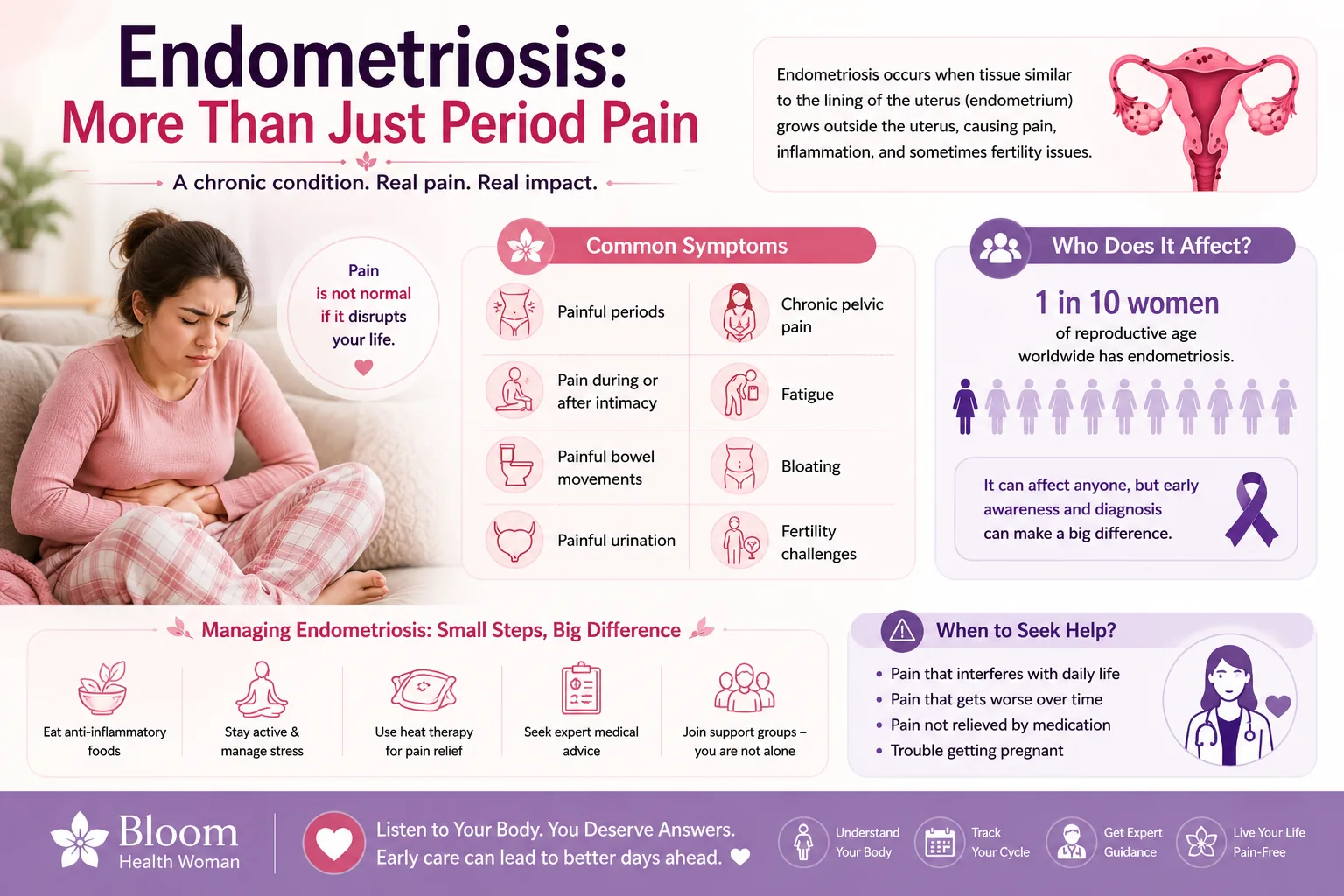
Endometriosis is a chronic condition in which tissue similar to the lining of the uterus grows in places outside the uterus — most often on the ovaries, fallopian tubes, and the tissue lining the pelvis. Like the uterine lining itself, this tissue responds to hormonal changes across the cycle: it thickens, breaks down, and bleeds. But unlike a normal period, that blood has no way to leave the body, which leads to inflammation, irritation, and over time, scar tissue or adhesions.
Research reviewed by organizations including the American College of Obstetricians and Gynecologists (ACOG) and the World Health Organization (WHO) suggests endometriosis affects roughly 1 in 10 women of reproductive age worldwide. Despite how common it is, diagnosis is frequently delayed by several years, in part because its symptoms can overlap with ordinary period pain and other conditions.
It's important to say plainly: reading about these symptoms cannot tell you whether you have endometriosis. Only a medical evaluation can do that. What this article can do is help you notice patterns worth raising with a doctor.
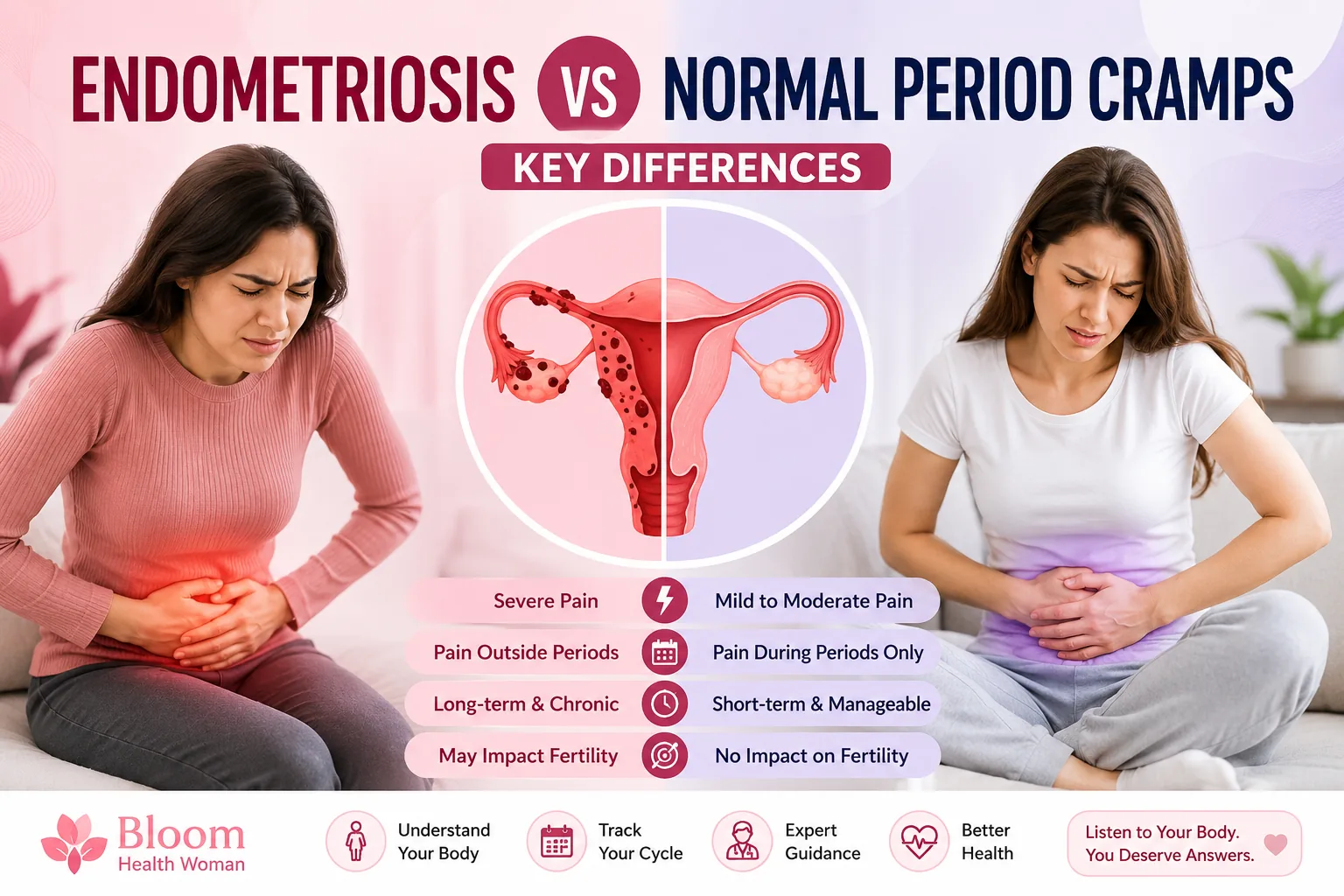
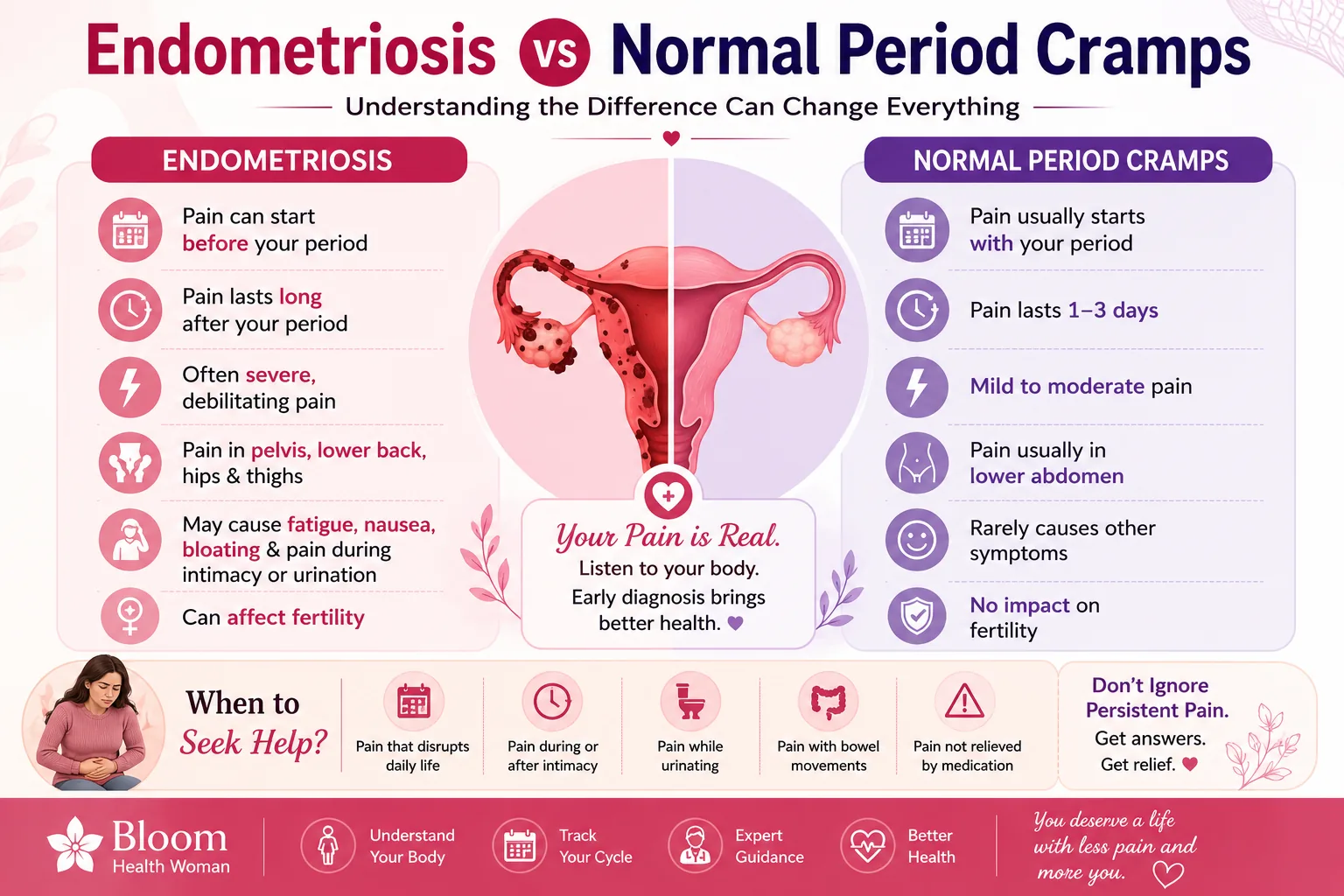
Endometriosis vs Normal Period Cramps: Key Differences
No two people experience either condition identically, and there's real overlap between the two. Still, clinicians often look at a handful of factors to help distinguish typical menstrual cramps from pain that may warrant further evaluation. Here's how they tend to compare.
| Factor | Normal Period Cramps | Possible Endometriosis Pain |
|---|---|---|
| Pain timing | Starts with or just before bleeding | May start days before a period and can occur at unpredictable times in the cycle |
| Pain duration | Usually 1–3 days | Can last through the whole period and linger afterward |
| Pain severity | Mild to moderate for most; can still be uncomfortable | Often described as severe or debilitating, though severity varies widely |
| Location | Lower abdomen, sometimes lower back or thighs | Pelvis, lower back, thighs; sometimes one-sided |
| Pain outside menstruation | Uncommon | May occur, including ovulation pain or chronic pelvic pain |
| Pain during sex | Rare | Deep pain during or after intercourse is a common feature |
| Bowel or urinary symptoms | Uncommon | Pain with bowel movements or urination, especially around a period, can occur |
| Impact on everyday activities | Usually manageable with rest and OTC medication | May interfere with work, school, or daily activities, and may not fully respond to standard pain relief |
| Possible fertility concerns | Not associated with fertility issues | Associated with fertility challenges in some, though many people with endometriosis conceive without difficulty |
A word of caution about that table: none of these features are exclusive to one condition. Some women with ordinary cramps have quite severe pain; some women with endometriosis have relatively mild or intermittent symptoms. The table is a guide to patterns worth paying attention to, not a checklist for self-diagnosis.
🌸 Track Your Cycle and Symptoms
Use our free Period Tracker and PMS Calculator to start noticing patterns in your own pain over time.
Track My Cycle →What Does Endometriosis Pain Feel Like?
Because endometriosis involves inflammation and, over time, potential scar tissue, the pain is often described differently from ordinary cramping. Rather than a rhythmic, contraction-like ache, many women describe it as a deep, sharp, or stabbing pain, sometimes with a burning or pulling quality. It can be constant rather than coming in waves, and it doesn't always ease up once bleeding starts, the way typical cramps usually do.
Some women describe the pain as one-sided, corresponding to where endometrial-like tissue has implanted. Others describe more generalized pelvic pain that's present most days of the month, with flares around their period. There's genuine variation here — endometriosis is sometimes called a condition with as many symptom patterns as there are people who have it, which is part of why it can be so hard to pin down from symptoms alone.
Symptoms That May Point to Endometriosis
Beyond the pain itself, endometriosis can involve a broader set of symptoms that go well past a typical period. These may include:
- Heavy menstrual bleeding, or bleeding between periods
- Chronic pelvic pain that isn't limited to your period
- Pain during or after sex, often described as deep rather than surface-level
- Pain with bowel movements or urination, particularly around your period
- Fatigue that feels disproportionate to your activity level
- Bloating, sometimes nicknamed "endo belly," which can come on suddenly
- Nausea, especially during a period
- Difficulty getting pregnant
Not everyone with endometriosis experiences all — or even most — of these. Some people have severe pain with few other symptoms; others have milder pain but more digestive or fertility-related concerns. This is exactly why symptom checklists can only point toward a possibility, not confirm a diagnosis.
When Period Pain Is Not "Normal"
It can help to reframe the question slightly: instead of asking "is my pain normal," ask "is my pain disrupting my life in ways that period pain typically shouldn't." A few signals worth paying attention to:
- Your pain regularly keeps you from work, school, or activities you'd otherwise be doing
- Over-the-counter pain relievers barely make a dent, or stop working over time
- The pain has been getting worse over recent cycles rather than staying steady
- You're missing school, work, or social plans specifically because of period pain, more than occasionally
- Pain shows up outside your period, not just during it
None of this means you definitely have endometriosis — plenty of other conditions, including adenomyosis, uterine fibroids, and pelvic inflammatory disease, can also cause pain that goes beyond typical cramps. What it does mean is that your symptoms fall outside what's considered ordinary, and that's worth a conversation with a healthcare provider rather than something to push through indefinitely.
When Should You See a Doctor?
Consider scheduling an appointment with a gynecologist or primary care provider if you notice any of the following:
- Period pain that is severe enough to interfere with daily life
- Pain that doesn't improve with standard over-the-counter medication
- Pain during or after sex
- Pain with bowel movements or urination around your period
- Heavy bleeding that soaks through a pad or tampon every hour or two
- Difficulty conceiving after a year of trying (or six months if you're over 35)
- Any pattern of pelvic pain that feels like it's changed or worsened over time
Bring specifics to the appointment if you can — when the pain starts, how long it lasts, what makes it better or worse, and anything else going on around the same time. A symptom or period tracker can make this easier to describe accurately.
How Endometriosis Is Diagnosed
There's no single blood test that confirms endometriosis, which is part of why it can take time to reach a diagnosis. Providers typically use a combination of approaches:
- Medical history and symptom review: A detailed conversation about your pain pattern, cycle, and other symptoms.
- Pelvic exam: To check for tenderness, cysts, or other physical signs.
- Imaging: Transvaginal ultrasound or MRI can sometimes identify endometriomas (ovarian cysts related to endometriosis) or deep infiltrating disease, though imaging can appear normal even when endometriosis is present.
- Laparoscopy: A minimally invasive surgical procedure that allows direct visualization of pelvic tissue, and remains the only way to definitively confirm endometriosis, often with a biopsy taken at the same time.
Many providers will begin with a trial of medical treatment based on symptoms alone before recommending surgery, since laparoscopy is invasive and not always necessary to start managing symptoms.
Treatment and Pain Management
There's no single treatment that works identically for everyone, and treatment is generally tailored to your symptoms, whether you're trying to conceive, and how the condition is affecting your life. Common approaches include:
Pain Management
- Over-the-counter NSAIDs such as ibuprofen or naproxen, which target the prostaglandins driving inflammation and pain
- Heat therapy, which can ease pelvic muscle tension
- Pelvic floor physical therapy, which some women find helpful for chronic pelvic pain
Hormonal Treatment
- Combined hormonal birth control (pills, patch, or ring), which can reduce or eliminate periods and the associated pain
- Progestin-only therapies, including certain IUDs, which can thin the uterine lining and reduce symptoms
- GnRH agonists or antagonists, which create a temporary, medically induced low-estrogen state to reduce lesion activity
Surgical Treatment
Laparoscopic surgery can remove or destroy visible endometriosis tissue, which may reduce pain and, in some cases, improve fertility. It isn't always a permanent fix — tissue can regrow over time in some people — so surgery is often paired with medical management afterward.
Lifestyle Approaches
Some women find that regular movement, anti-inflammatory eating patterns, stress management, and adequate sleep help take the edge off symptoms, though these approaches work alongside medical care rather than replacing it.
Endometriosis and Fertility
Endometriosis is one of several conditions associated with fertility difficulties, largely because inflammation, scar tissue, or ovarian cysts can affect the ovaries, fallopian tubes, or the uterine environment. That said, many women with endometriosis conceive without any fertility treatment at all, and the relationship between endometriosis severity and fertility isn't always straightforward — some women with mild disease have significant fertility challenges, while some with more extensive disease conceive easily.
For those who do experience difficulty conceiving, options range from monitoring ovulation and timing intercourse, to fertility medications, to procedures like IUI or IVF, to surgical removal of endometriosis tissue. A reproductive endocrinologist can help map out the right path based on your specific situation.
🌸 Thinking About Fertility?
Our free Ovulation Calculator and educational Fertility Factors Estimate can help you reflect on your cycle while you talk through next steps with your doctor.
Check My Fertility Score →Final Takeaway
Ordinary period cramps and endometriosis pain can look similar on the surface, but the patterns tend to diverge once you look closely: how long the pain lasts, where it shows up, what else comes with it, and how much it disrupts daily life. If your pain regularly crosses those lines — lasting longer than a few days, showing up outside your period, or not responding to standard pain relief — it's a reasonable, worthwhile thing to bring to a doctor.
You don't need to have every symptom on a list, and you don't need to be certain before you ask for help. A conversation with a gynecologist is the appropriate next step for figuring out what's actually going on, and getting evaluated sooner rather than later tends to make management easier down the road, whatever the cause turns out to be.
Frequently Asked Questions
Further reading from health authorities
General topic pages from authoritative organizations for further reading. They are suggested resources and are not a line-by-line citation of the statements in this article. Always confirm personal medical decisions with a healthcare professional.