📋 In This Article
Why Women Should Strength Train
For a long time, the message aimed at women in gyms was all cardio, no weights — as if lifting anything heavier than a yoga mat would somehow backfire. That advice hasn't aged well. Strength training for women is one of the most protective, empowering things you can do for your body, at every single age and stage of life.
This isn't about chasing a bodybuilder physique. It's about building a body that can carry groceries, climb stairs, and stay strong for decades, while also supporting hormone balance, bone density, mood, and metabolic health in ways cardio alone simply can't match.
Quick Summary
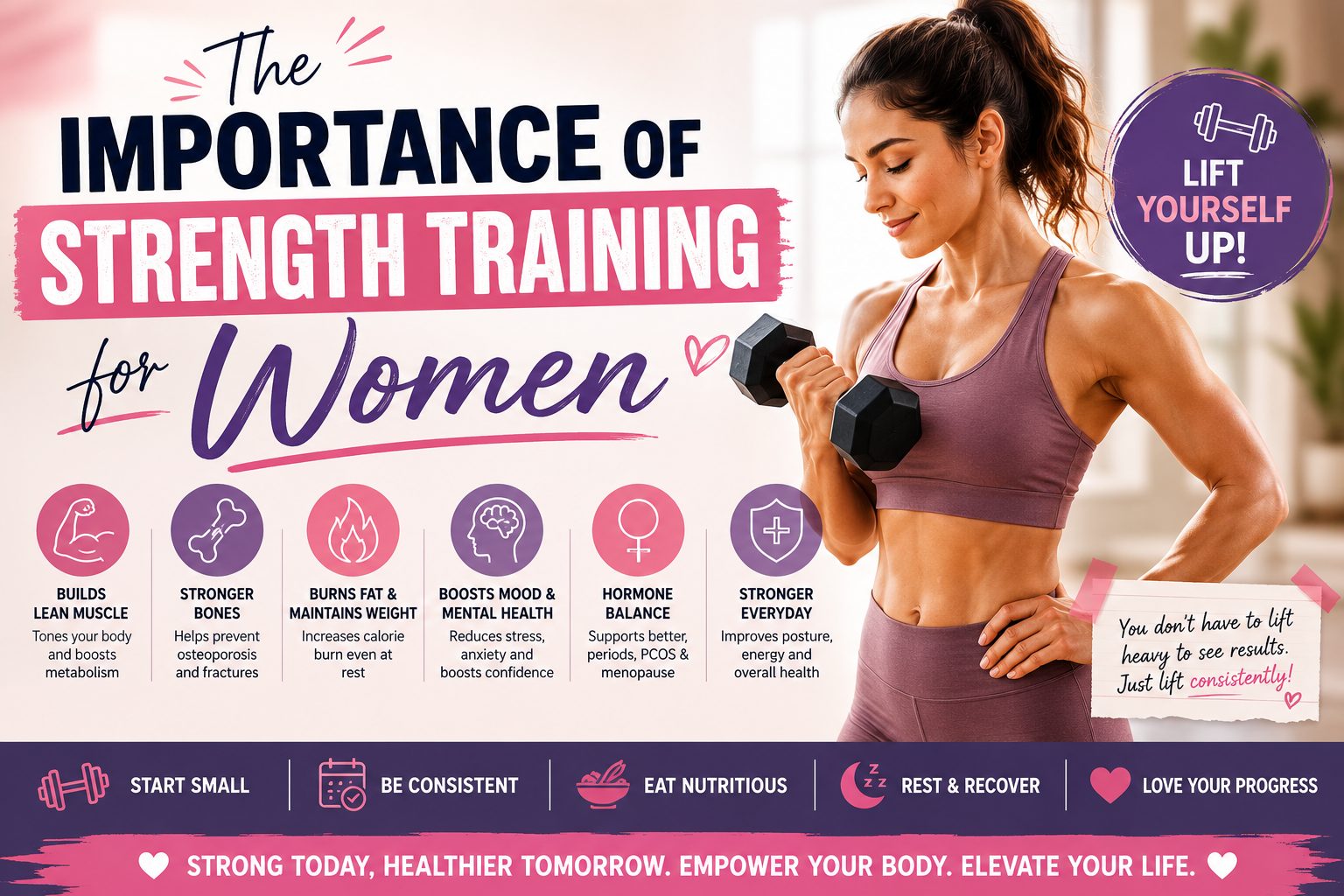
- Strength training builds lean muscle, which boosts your resting metabolism.
- It's one of the best defenses against osteoporosis and age-related bone loss.
- Lifting weights supports hormone balance, including insulin sensitivity relevant to PCOS.
- Strength training eases many menopause symptoms, including muscle and bone loss.
- It's safe during pregnancy and postpartum with proper modifications and clearance.
- Starting small and staying consistent beats lifting heavy occasionally.
- Protein intake and recovery matter as much as the workouts themselves.
Hormonal Benefits
Resistance training influences several hormones that matter enormously for women's health. It improves insulin sensitivity, helping your body use blood sugar more efficiently. It also supports healthy cortisol regulation over time, and stimulates the release of endorphins and growth hormone that aid mood, tissue repair, and metabolic function.
Bone Health
Bone density naturally declines with age, and the drop accelerates for women after menopause as estrogen falls. Weight-bearing and resistance exercise places mechanical stress on bone, which signals the body to maintain or even build bone density in response. This is one of the most well-documented, non-pharmaceutical ways to help reduce the risk of osteoporosis and reduce fracture risk later in life.
Muscle Growth
Women naturally have less testosterone than men, which means building visible muscle bulk takes deliberate, sustained effort — the "bulky" fear many women have about lifting weights isn't realistic without a specific, intensive training and nutrition plan. What you will notice is toned, functional muscle that improves posture, everyday strength, and how your clothes fit.
Fat Loss
Muscle tissue burns more calories at rest than fat tissue does, meaning more lean muscle raises your overall metabolic rate. Strength training also creates an "afterburn" effect, where your body continues to burn calories at an elevated rate for hours after a session — something steady-state cardio alone doesn't replicate as effectively.
PCOS Benefits
For women with PCOS, insulin resistance is often at the root of symptoms like irregular cycles and weight gain. Strength training directly improves how muscles take up and use glucose, which can help regulate insulin levels over time. Combined with balanced nutrition, resistance training is frequently recommended alongside cardio as part of a PCOS management plan. Read more in our PCOS Diet Plan for Weight Loss guide.
Menopause Benefits
The drop in estrogen during perimenopause and menopause accelerates both muscle and bone loss, and can also affect mood and sleep. Strength training directly counters several of these changes — preserving lean mass, supporting bone density, and giving many women a meaningful mood and energy boost during a transition that can otherwise feel destabilizing.
Pregnancy and Postpartum Considerations
For most low-risk pregnancies, moderate strength training is considered safe and can even ease common discomforts like back pain, when cleared by a healthcare provider. Modifications typically include avoiding exercises flat on your back after the first trimester and adjusting intensity as pregnancy progresses. Postpartum, a gradual return to strength training — starting with core and pelvic floor rehabilitation — supports long-term recovery. Always get individual clearance from your OB-GYN or midwife before resuming or starting a program.
Beginner Workout Plan
You don't need a gym membership or fancy equipment to begin. Bodyweight and light dumbbells are enough for the first several weeks.
| Exercise | Sets x Reps | Focus |
|---|---|---|
| Bodyweight squats | 3 x 10–12 | Legs, glutes |
| Push-ups (knee or full) | 3 x 8–10 | Chest, arms, core |
| Dumbbell rows | 3 x 10–12 | Back, posture |
| Glute bridges | 3 x 12–15 | Glutes, lower back |
| Plank hold | 3 x 20–30 sec | Core stability |
Weekly Schedule
- Monday: Full-body strength training (as above)
- Tuesday: Rest or gentle walk
- Wednesday: Full-body strength training
- Thursday: Rest or light cardio
- Friday: Full-body strength training
- Saturday: Optional active recovery (yoga, walking)
- Sunday: Full rest
Pro Tip: Increase weight or reps gradually — roughly 5–10% every one to two weeks — rather than jumping heavy too soon. Consistency beats intensity for beginners.
Nutrition and Protein Intake
Muscle repair and growth depend heavily on adequate protein intake alongside training. General guidance suggests active women aim for roughly 1.2 to 1.6 grams of protein per kilogram of body weight daily, spread across meals, though individual needs vary. Good sources include eggs, poultry, fish, Greek yogurt, legumes, and tofu.
| Nutrient | Why It Matters | Good Sources |
|---|---|---|
| Protein | Muscle repair and growth | Eggs, chicken, fish, lentils, Greek yogurt |
| Complex Carbs | Fuel for workouts and recovery | Oats, sweet potatoes, brown rice |
| Healthy Fats | Hormone production | Avocado, olive oil, nuts, seeds |
| Calcium & Vitamin D | Bone health support | Dairy, fortified plant milk, leafy greens, sunlight |
Recovery
Muscles rebuild during rest, not during the workout itself. Aim for at least one rest day between training the same muscle group, prioritize 7–9 hours of sleep, and stay hydrated. Skipping recovery is one of the fastest ways to stall progress or increase injury risk.
Common Mistakes
- Doing cardio only: Skipping resistance work misses out on bone, muscle, and metabolic benefits cardio alone can't provide.
- Lifting too light, forever: Progressive overload — gradually increasing weight or reps — is what drives results over time.
- Skipping warm-ups: A proper warm-up reduces injury risk and improves performance.
- Ignoring form for heavier weight: Poor form increases injury risk far more than it speeds up progress.
- Not eating enough protein: Under-fueling recovery undermines the muscle-building stimulus from training.
Myths vs Facts
Scientific Evidence
Research from the National Institutes of Health (NIH) supports resistance training as an effective strategy for preserving bone mineral density and preventing sarcopenia, the age-related loss of muscle mass. Studies on PCOS have also shown that resistance exercise improves insulin sensitivity, an important factor in managing the condition. The World Health Organization (WHO) includes muscle-strengthening activity at least twice a week as part of its general physical activity guidelines for adults.
💪 Track Your Fitness Journey
Use our free BMI Calculator, Ideal Weight Calculator, and Calorie Calculator to support your strength training goals.
Explore All Tools →Frequently Asked Questions
Conclusion
Strength training isn't just for athletes or bodybuilders — it's one of the most protective habits a woman can build into her life, from her twenties through menopause and beyond. Stronger muscles support stronger bones, more balanced hormones, better mood, and a body that keeps up with you for decades. Start small, stay consistent, and let the results build over time.
📖 Related Articles
📚 Medical References
- National Institutes of Health (NIH) — Resistance Training and Bone Density
- World Health Organization (WHO) — Physical Activity Guidelines for Adults
- American College of Obstetricians and Gynecologists (ACOG) — Exercise During Pregnancy
- Centers for Disease Control and Prevention (CDC) — Muscle-Strengthening Activity Guidelines
🌸 More Free Wellness Tools
Explore our BMI Calculator, Ideal Weight Calculator, Calorie Calculator, and Water Intake Calculator — all free and instant.
Explore All Tools →Further reading from health authorities
General topic pages from authoritative organizations for further reading. They are suggested resources and are not a line-by-line citation of the statements in this article. Always confirm personal medical decisions with a healthcare professional.