📋 In This Article
If you've ever been told your period pain is "just bad cramps," you're not alone — and you might not be getting the full picture. Endometriosis affects roughly 1 in 10 women of reproductive age worldwide, yet it remains one of the most under-recognized conditions in women's health. Many women live with debilitating symptoms for years before anyone connects the dots.
The tricky part is that endometriosis doesn't always look the way people expect. It's not just heavy, painful periods. It can show up as bowel issues, chronic fatigue, pain during intimacy, or a nagging ache that never fully goes away — even between cycles. Because these symptoms overlap with so many other conditions, it's easy for both women and doctors to miss it. Here's what to actually watch for, and why catching it earlier matters. If you're specifically trying to work out whether your cramps fall in the "normal" range or not, our guide on endometriosis vs normal period cramps breaks that comparison down in detail.
What Is Endometriosis?
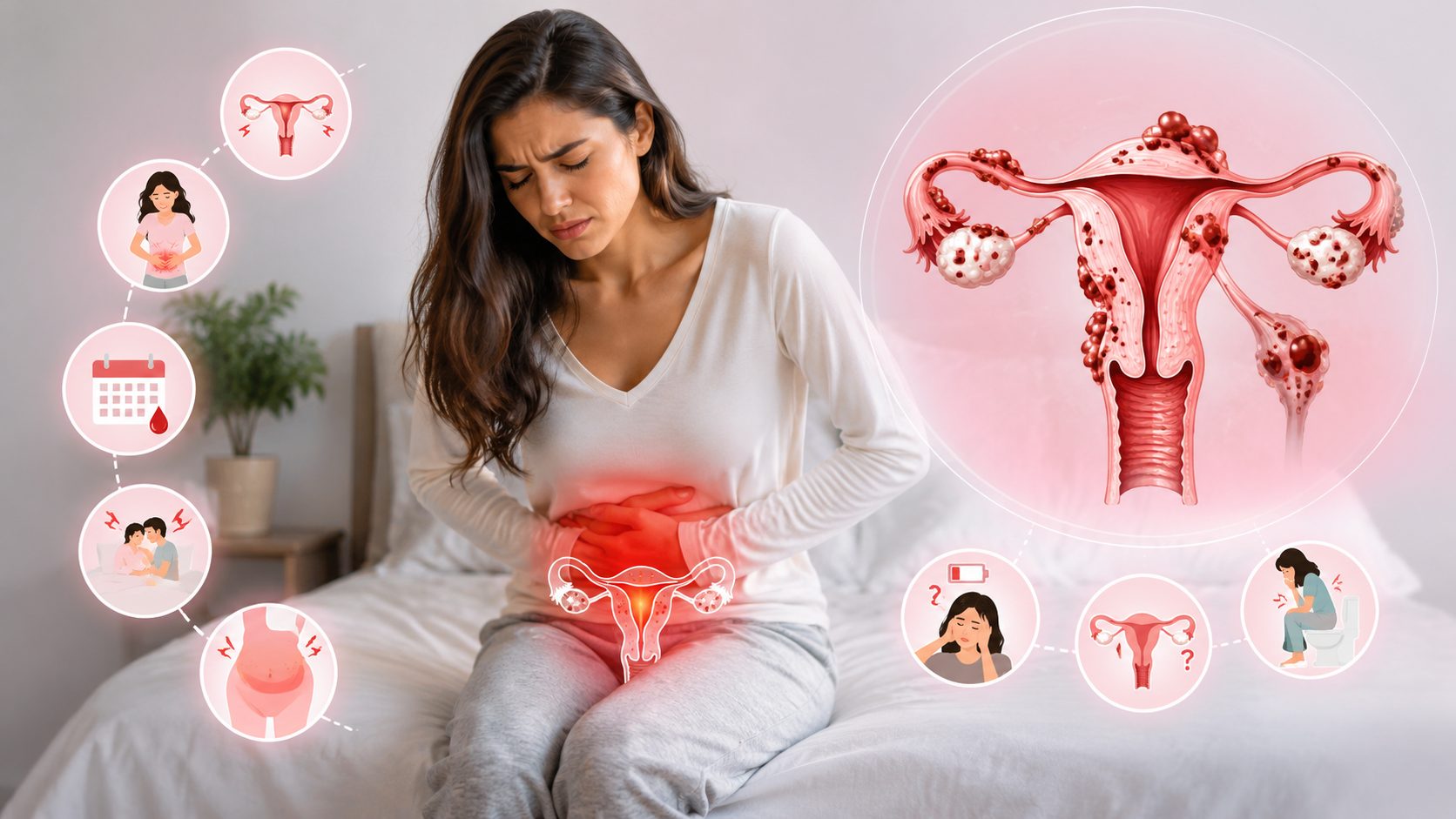
Endometriosis happens when tissue similar to the lining of the uterus — the endometrium — starts growing outside the uterus. These growths, sometimes called implants or lesions, are most commonly found on the ovaries, fallopian tubes, and the tissue lining the pelvis. In more advanced cases, they can appear on the bowel, bladder, or even further away from the reproductive organs.
Just like the tissue inside the uterus, these misplaced growths respond to the hormonal changes of your menstrual cycle. They thicken, break down, and bleed each month — but unlike a normal period, this blood has nowhere to go. It becomes trapped, triggering inflammation, scar tissue, and in some cases, adhesions that cause organs to stick together.
This is why endometriosis pain is often so much more intense than typical period discomfort. It isn't simply a "heavy period" — it's an ongoing inflammatory process that can affect the body well beyond the days you're actually bleeding.
12 Symptoms You Shouldn't Ignore
Endometriosis symptoms vary widely from woman to woman, and severity doesn't always match how advanced the condition is — some women with extensive endometriosis have mild symptoms, while others with small lesions experience severe pain. Still, certain patterns come up again and again.
1. Period Pain That Disrupts Daily Life
This is the hallmark symptom. We're not talking about ordinary cramps that respond to a heating pad and an ibuprofen — this is pain intense enough to keep you home from work or school, pain that doesn't fully respond to over-the-counter medication, or pain that starts a day or two before your period even begins.
2. Pain During or After Sex
Deep pain during intercourse, particularly with deep penetration, is one of the more specific signs of endometriosis. This happens because lesions and adhesions in the pelvis can be directly irritated during sex, and the pain can linger for hours or even a day afterward.
3. Chronic Pelvic Pain Between Periods
One of the biggest clues that separates endometriosis from ordinary period pain is that the discomfort doesn't fully disappear once your period ends. Many women describe a dull, constant ache in the lower abdomen or pelvis that flares around ovulation and menstruation but never completely resolves.
4. Heavy Menstrual Bleeding
Soaking through a pad or tampon every hour, passing large clots, or bleeding for more than seven days are all signs worth mentioning to a doctor. Heavy bleeding alone doesn't confirm endometriosis, but combined with severe pain, it's a pattern worth investigating.
5. Painful Bowel Movements or Urination
When endometrial-like tissue grows near the bowel or bladder, it can cause pain during bowel movements or urination — especially around your period. This symptom is frequently mistaken for a urinary tract infection or a digestive issue, delaying proper diagnosis.
6. Digestive Symptoms That Mimic IBS
Bloating, diarrhea, constipation, and nausea are extremely common in endometriosis, so much so that the condition is sometimes nicknamed "endo belly." Many women are diagnosed with irritable bowel syndrome (IBS) for years before endometriosis is ever considered, particularly when digestive symptoms flare around the menstrual cycle.
7. Fatigue That Doesn't Improve With Rest
Chronic inflammation takes a real toll on energy levels. Persistent, unexplained exhaustion — especially fatigue that gets worse around your period and doesn't improve no matter how much you sleep — is a commonly overlooked symptom.
8. Lower Back and Leg Pain
Endometriosis lesions can irritate nerves in the pelvis, sometimes causing pain that radiates into the lower back, hips, or down the legs, particularly during menstruation. This referred pain often gets mistaken for an orthopedic issue rather than a gynecological one.
9. Difficulty Getting Pregnant
For some women, the first sign of endometriosis isn't pain at all — it's difficulty conceiving. Endometriosis is found in a meaningful percentage of women being evaluated for infertility, since inflammation, scar tissue, and distorted anatomy can all interfere with the process of conception.
10. Bloating and Abdominal Swelling
Separate from digestive bloating, some women notice visible abdominal swelling that fluctuates with their cycle — sometimes severe enough that clothing that fit in the morning feels tight by evening.
11. Pain With Specific Movements
Sharp or pulling pain with certain movements — bending, twisting, or straining — can occur when adhesions have caused organs to become less mobile than they should be.
12. Mood Changes and Anxiety Around Your Cycle
Living with unpredictable, chronic pain takes a genuine emotional toll. Many women with endometriosis report heightened anxiety or low mood in the days leading up to their period, which can be a combination of hormonal shifts and the anticipatory stress of dealing with pain.
Important: You don't need to have all 12 of these symptoms for endometriosis to be worth discussing with your doctor. Even two or three of these patterns — especially period pain that interferes with your life — are reason enough to ask for a proper evaluation.
Hidden Signs That Are Often Missed
Beyond the classic symptoms, there are a few subtler patterns that frequently get overlooked or blamed on other things entirely.
Pain during a pelvic exam, unexplained lower abdominal pain that shows up mid-cycle (around ovulation), and a family history of endometriosis — since the condition does have a genetic component — are all details worth mentioning to your doctor, even if they seem minor on their own. Similarly, if you've been diagnosed with IBS or a bladder condition but the treatments haven't helped much, it's worth asking whether endometriosis could be part of the picture.
What Causes Endometriosis?
The exact cause of endometriosis is still not fully understood, and researchers believe it likely results from a combination of factors rather than one single cause. The leading theories include:
- Retrograde menstruation: Menstrual blood flows backward through the fallopian tubes into the pelvic cavity instead of leaving the body, allowing endometrial-like cells to implant and grow.
- Immune system differences: An immune system that doesn't recognize and clear misplaced endometrial cells the way it normally would may allow these cells to survive and grow outside the uterus.
- Genetics: Having a mother or sister with endometriosis raises your own risk, pointing to a hereditary component.
- Hormonal factors: Estrogen appears to fuel the growth of endometrial tissue, which is part of why symptoms often improve during pregnancy or after menopause, when estrogen levels change.
It's worth being clear that endometriosis is not caused by anything you did — it isn't linked to hygiene, sexual activity, or lifestyle choices, despite some persistent myths.
Doctors also classify endometriosis into stages — from Stage I (minimal) to Stage IV (severe) — based on the location, extent, and depth of the growths, along with the presence of adhesions or ovarian cysts. It's worth knowing that stage doesn't reliably predict how much pain you'll experience. Someone with Stage I endometriosis can have severe, disruptive pain, while someone with Stage IV disease may have relatively mild symptoms. This is one more reason doctors focus on your actual symptoms and quality of life, not just what a scan or surgical finding shows on paper.
🩸 Track Your Cycle and Symptoms
Use our free Period Tracker to log pain, flow, and symptoms — patterns you can bring straight to your doctor's appointment.
Start Tracking →Why Diagnosis Takes So Long
One of the most frustrating realities of endometriosis is the delay between the first symptoms and an actual diagnosis — research puts the average delay at 7 to 10 years. There are a few reasons for this. Period pain is often normalized, both by women themselves and by doctors, as just "part of being a woman." Symptoms overlap heavily with other conditions like IBS and pelvic inflammatory disease, leading to misdiagnosis. And critically, a standard pelvic ultrasound frequently looks completely normal, even when endometriosis is present, because smaller implants don't always show up on imaging.
The only way to definitively confirm endometriosis is through laparoscopy, a minimally invasive surgical procedure that allows a doctor to directly visualize — and often remove — the tissue. However, doctors may still make a working diagnosis based on symptoms, a pelvic exam, and imaging like ultrasound or MRI before recommending surgery, and may start treatment based on that clinical picture alone.
If your ultrasound has come back "normal" but your symptoms haven't improved, that alone doesn't rule out endometriosis. It simply means further conversation with your doctor about your specific symptom pattern is worthwhile.
Endometriosis and Fertility
Endometriosis is one of the more common findings in women being evaluated for infertility, though it's important to know that many women with endometriosis conceive without any medical assistance at all. When fertility is affected, it's usually due to a combination of factors: inflammation that can affect egg quality, scar tissue that distorts the position of the ovaries and fallopian tubes, or cysts on the ovaries known as endometriomas that can reduce the number of healthy eggs available.
If you have endometriosis and are trying to conceive, treatment options range from surgery to remove lesions and improve anatomy, to fertility treatments like IUI or IVF when needed. Early diagnosis and a fertility-focused treatment plan can make a meaningful difference, so it's worth raising fertility concerns with your doctor as soon as they come up rather than waiting.
Treatment and Management Options
There's no cure for endometriosis, but there are several effective ways to manage it, and treatment is typically tailored to your symptoms, age, and whether you're trying to conceive.
- Pain relief: NSAIDs like ibuprofen are often the first step for managing pain, though they may not be enough on their own for moderate to severe cases.
- Hormonal therapy: Birth control pills, hormonal IUDs, or GnRH agonists can reduce or stop the hormonal fluctuations that drive lesion growth, easing symptoms significantly for many women.
- Laparoscopic surgery: Surgical removal of endometrial implants and scar tissue can relieve pain and, in some cases, improve fertility outcomes.
- Lifestyle approaches: Anti-inflammatory eating patterns, gentle regular exercise, physical therapy for pelvic floor tension, and stress management are commonly used alongside medical treatment, though they work best as a complement to — not a replacement for — proper medical care.
Because endometriosis affects everyone differently, what works well for one woman may not work for another. It often takes some trial and adjustment with your doctor to land on the right combination of treatments.
Support also matters more than people expect. Endometriosis is a chronic condition, and living with unpredictable pain month after month can be isolating, especially when friends, family, or even past doctors have minimized it. Connecting with others who understand — whether through a support group, an online community, or simply a partner who's been brought up to speed on what you're dealing with — can make the day-to-day experience noticeably more manageable. Pain that is understood and validated is easier to cope with than pain you feel you have to justify.
When to See a Doctor
You don't need to wait for symptoms to become unbearable before seeking help. It's worth booking an appointment if period pain regularly stops you from going to work, school, or normal activities; if you experience pain during sex that concerns you; if you have chronic pelvic pain that doesn't fully go away between periods; or if you've been trying to conceive for six months to a year without success (or sooner if you're over 35).
When you go in, it can help to bring a record of your symptoms — when they happen, how severe they are, and how they relate to your cycle. A symptom and period tracker can make this conversation far more productive, since doctors often rely heavily on the pattern of symptoms, not just a single visit's description, to guide next steps.
Living with unexplained pain for years is exhausting, and it's easy to start doubting yourself when test after test comes back "normal." But normal imaging doesn't mean nothing is wrong — it often just means the next step is a more targeted conversation with a gynecologist who takes your symptoms seriously. You know your body, and persistent pain is always worth investigating further.
Further reading from health authorities
General topic pages from authoritative organizations for further reading. They are suggested resources and are not a line-by-line citation of the statements in this article. Always confirm personal medical decisions with a healthcare professional.