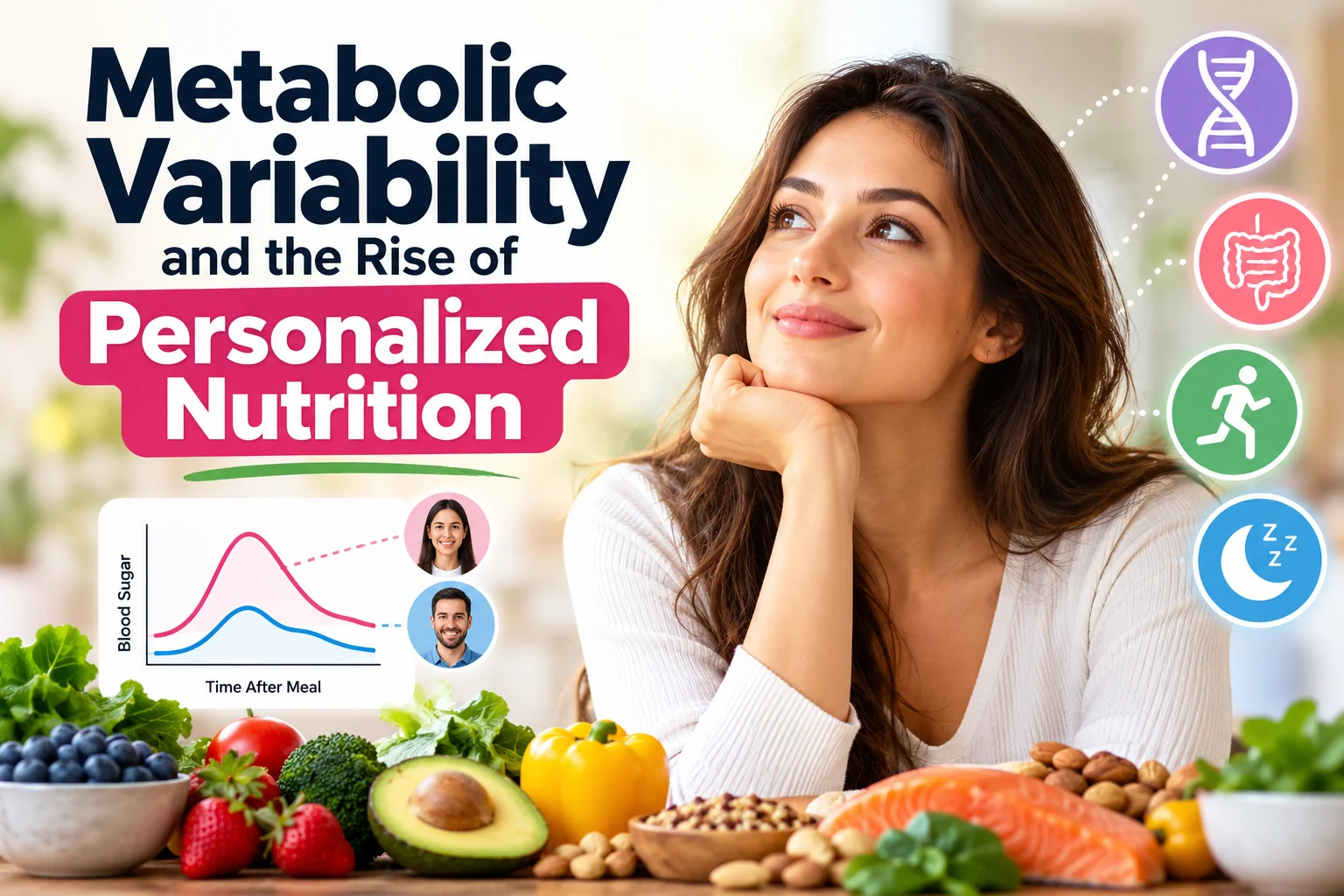
Even for the same meal and quantity, the blood sugar response may differ between two individuals. Traditional nutritional science is based on average metabolic responses that represent populations rather than individuals.1,3
This article looks at why individual differences in metabolic responses matter, and why recognizing them is the first step toward personalized nutrition: dietary recommendations tailored to each person's unique biology.
🔑 Key Takeaways
The same meal can lead to very different blood sugar responses in different people, so population averages do not describe everyone.
Metabolism is dynamic. It is shaped by genetics, the gut microbiome, lifestyle (activity, sleep, daily habits) and the environment.
Personalized nutrition is promising, but many personalized recommendations still need stronger scientific validation, and advanced testing can be costly.
It does not always require expensive tests: advice that fits your health needs, food preferences, lifestyle and circumstances can be more relevant and sustainable.
Metabolic Variability: Beyond Population Averages
For decades, metabolic health has been assessed using blood glucose, HbA1c and cholesterol levels, among others, on the assumption that these occasional tests reflect a person's metabolic health.
But this is changing. Scientists now understand that metabolism is highly dynamic and is influenced by what we eat, how we sleep, how active we are, and many other daily factors. New technologies can now track these changes in real time.
This growing awareness of metabolic variability is leading to personalized nutrition, in which dietary recommendations are tailored to an individual's biology and metabolic profile.
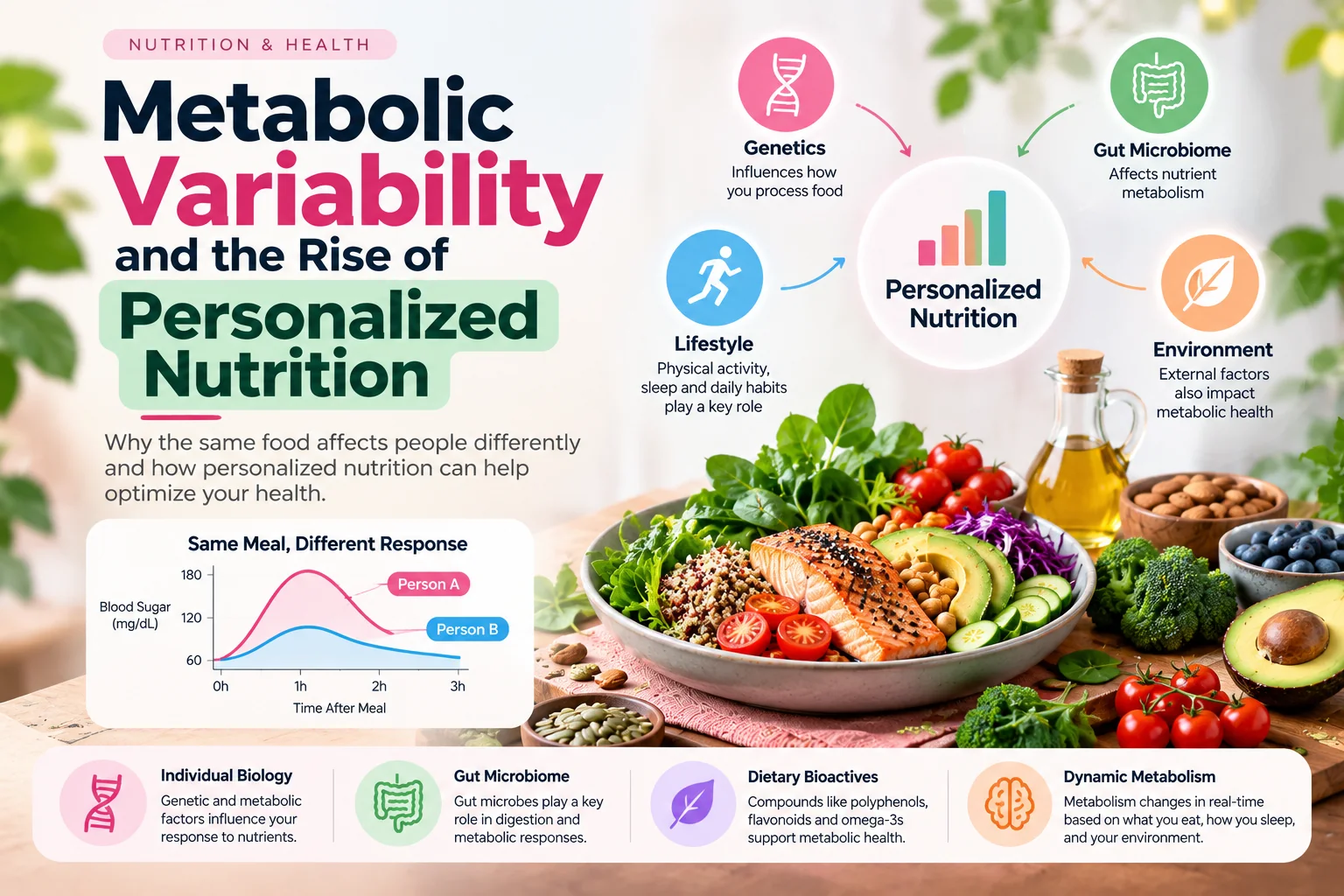
Illustration of the main factors behind metabolic variability. The blood sugar curves are a simplified, illustrative example of two people responding differently to the same meal, not data from a specific study.
What Drives Metabolic Variability?
Metabolic differences between individuals are due to a combination of genetic, gut microbiome, lifestyle and environmental factors.1,2 Our genetics and gut microbiome influence how we process and respond to food. Factors such as physical activity, sleep and environmental exposures further shape an individual's metabolic profile.
These factors interact in complex ways, so the same diet might not produce the same response in everyone. Learning about the differences between groups could help researchers develop more personalized approaches to nutrition.
Basics of Personalized Nutrition
Personalized nutrition seeks to break away from the one-size-fits-all approach by considering differences in an individual's biology, metabolism and lifestyle.1
Three main areas of research include biological variation at the individual level, the gut microbiome, and dietary bioactive compounds. In a landmark study, Zeevi et al. (2015) found that people's blood glucose responses to the same meals varied dramatically, and linked this variation to individual factors such as differences in gut microbiome composition.4
Individual biological differences
Genetic and metabolic factors can affect an individual's reaction to nutrients and dietary patterns. Understanding these differences may help identify more suitable dietary approaches for individuals in the future.
Gut microbiome
Microorganisms in the gut are involved in digestion and nutrient metabolism. Differences in gut microbial composition may be responsible for individual responses to specific foods.
Dietary bioactive compounds
Research is exploring the role of compounds such as polyphenols, flavonoids and omega-3 fatty acids in metabolic health and inflammation.2 But these effects depend on variables such as the specific compound, the amount consumed and overall dietary patterns.
Together, these areas of research are improving our understanding of why nutritional requirements and responses differ between individuals.
Personalized nutrition has great potential, but several challenges remain. It relies on genetic, metabolic and other biological data, which can be difficult to collect, process and convert into actionable dietary recommendations for healthy eating habits.1
Because genetics, metabolism and gut microbiomes differ, individuals react differently to the same food. However, many personalized recommendations still require stronger scientific validation.
Personalized advice is also difficult to integrate into population-wide dietary guidelines. Genetic testing, metabolic monitoring and advanced technologies can be expensive and are not widely available in many countries. Overall, the main challenge is to convert complex biological information into reliable, practical and affordable nutritional recommendations.
Practical note: Because the evidence is still developing, treat consumer tests, glucose monitors and nutrition apps as tools for learning, not as medical advice. If you have diabetes, prediabetes or any other medical condition, talk to your doctor or a registered dietitian before changing your diet or medication.
Making Personalized Nutrition More Accessible
Several developments could help make personalized nutrition available to a larger population:
Artificial intelligence and data analytics can simplify complex health data and provide personalized dietary advice at lower cost.
Stratified nutritional approaches can group individuals with similar metabolic characteristics, making it easier to deliver personalized recommendations at scale.
Research on dietary bioactives can support the development of healthier foods and targeted nutritional recommendations.
Wearables and mobile health apps can provide real-time feedback, making personalized guidance more practical.
Holistic dietary approaches that focus on overall food patterns rather than individual nutrients can help translate scientific advances into everyday nutritional advice.
Importantly, personalized nutrition does not always require expensive tests or advanced technologies. Dietary guidance that considers an individual's health needs, food preferences, lifestyle and circumstances can make nutrition advice more relevant and sustainable.
Conclusion
As our understanding of metabolic variability increases, nutritional science is shifting toward more personalized approaches to health. Advances in AI, omics technologies and digital health tools are bringing personalized nutrition closer to everyday practice, but turning complex biology into reliable, practical and affordable advice remains the central task.
Frequently Asked Questions
What is metabolic variability?
Metabolic variability means that people can respond differently to the same food, even when the meal and the quantity are identical. For example, two people can show very different blood sugar responses to the same meal.
Why do two people respond differently to the same meal?
Metabolic differences between individuals arise from a combination of genetic, gut microbiome, lifestyle and environmental factors. Genetics and the gut microbiome influence how we process and respond to food, while physical activity, sleep and environmental exposures further shape each person's metabolic profile.
What did the Zeevi et al. 2015 study find?
This landmark study found that people's blood glucose responses to the same meals varied dramatically from person to person. The researchers linked this variation to individual factors such as gut microbiome composition, and showed that responses could be predicted from personal data.
Does personalized nutrition always require expensive tests?
No. Genetic testing, metabolic monitoring and advanced technologies can be expensive and are not widely available in many countries, but guidance that considers a person's health needs, food preferences, lifestyle and circumstances can also make nutrition advice more relevant and sustainable.
What are the main challenges of personalized nutrition?
Genetic, metabolic and other biological data can be difficult to collect, process and turn into practical dietary advice. Many personalized recommendations still need stronger scientific validation, are hard to fit into population-wide guidelines, and can be costly.
How could personalized nutrition become more accessible?
Artificial intelligence and data analytics, stratified approaches that group people with similar metabolic characteristics, wearables and mobile health apps, and holistic dietary approaches focused on overall food patterns could all help deliver personalized guidance to more people at a lower cost.
References
Verma M, Hontecillas R, Tubau-Juni N, Abedi V, Bassaganya-Riera J. Challenges in Personalized Nutrition and Health. Front Nutr. 2018;5:117. Published 2018 Nov 29. doi:10.3389/fnut.2018.00117
Leziak A, Lipina J, Reclik M, Kocelak P. Dietary Modulation of Metabolic Health: From Bioactive Compounds to Personalized Nutrition. Metabolites. 2025;15(9):624. Published 2025 Sep 19. doi:10.3390/metabo15090624
Mozaffarian D, Rosenberg I, Uauy R. History of modern nutrition science: implications for current research, dietary guidelines, and food policy. BMJ. 2018;361:k2392. Published 2018 Jun 13. doi:10.1136/bmj.k2392
Zeevi D, Korem T, Zmora N, et al. Personalized nutrition by prediction of glycemic responses. Cell. 2015;163(5):1079–1094. doi:10.1016/j.cell.2015.11.001
M.Sc. Biochemistry · Biomedical Research | Medical Writing | Scientific Communication
Sailaja Sasibindu has a background in biomedical research and is currently transitioning into medical writing and scientific communication. Her areas of interest include women's health, PCOS, nutrition, and metabolic health. She is focused on translating scientific information into clear, accurate, and accessible content for general readers.
Medical Disclaimer: This article is for informational and educational purposes only and does not constitute medical advice, diagnosis, or treatment. Nutrition needs differ from person to person, so please talk with a doctor or registered dietitian before making changes to your diet, supplements, or medication.
General topic pages from authoritative organizations for further reading. They are suggested resources and are not a line-by-line citation of the statements in this article. Always confirm personal medical decisions with a healthcare professional.
🍪 We use cookies and similar technologies for site preferences, analytics and advertising (including Google services). Calculator inputs are processed in your browser and are not sent to our servers. Privacy Policy
 Written by Sailaja Sasibindu, M.Sc. Biochemistry
6 min read
October 22, 2026
4 Scientific References