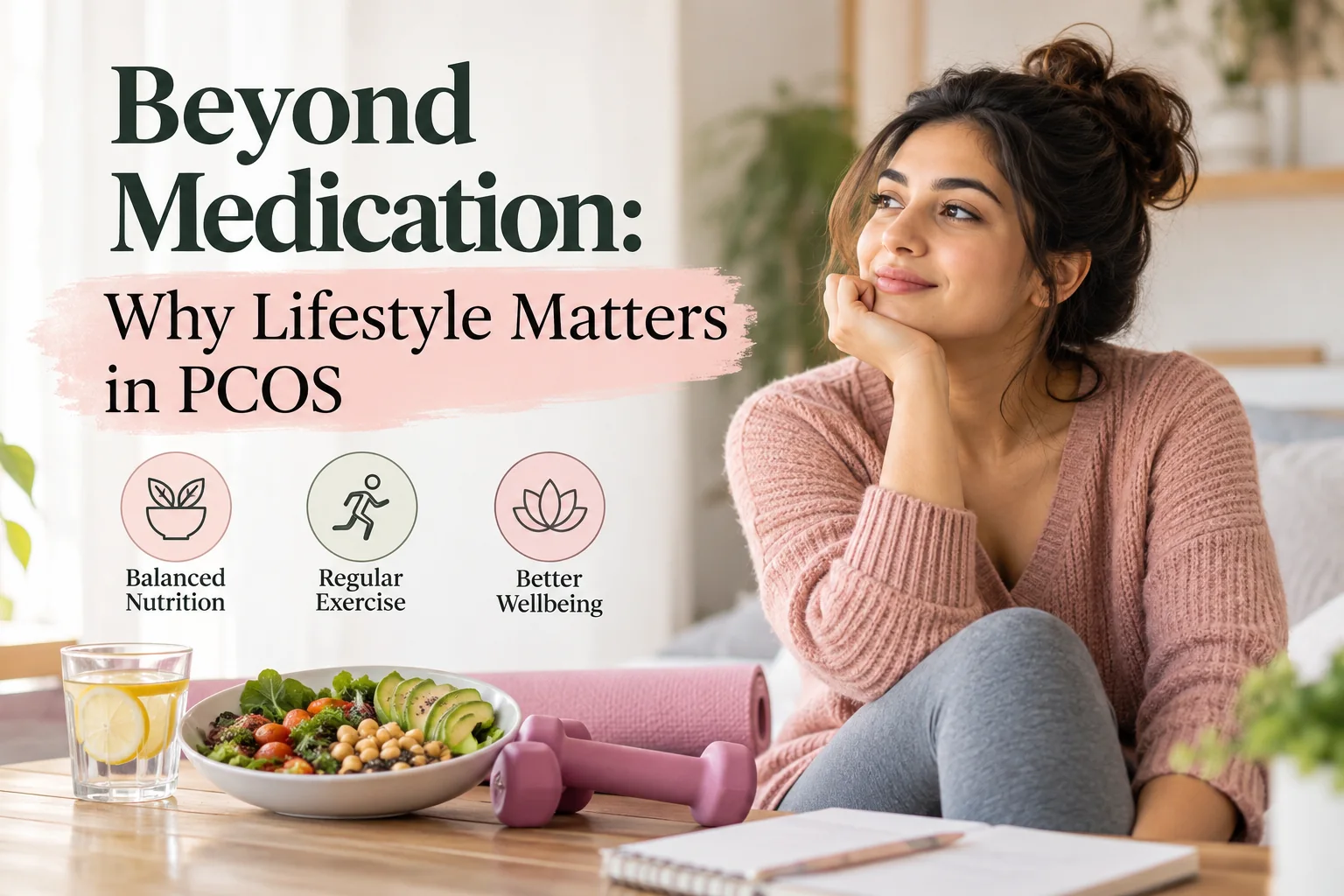
Polycystic Ovary Syndrome (PCOS), renamed polyendocrine metabolic ovarian syndrome (PMOS), is often discussed in terms of hormones and medications—but the story is far more complex.
Affecting nearly 4–18% of women of reproductive age worldwide, PCOS is a multifaceted condition that extends beyond reproductive health. It involves a combination of hormonal imbalances, metabolic dysfunction, and, in many cases, significant psychological challenges such as anxiety, mood disturbances, and body image concerns.
One of the reasons PCOS remains underdiagnosed and poorly managed is its highly variable presentation. No two individuals experience it in exactly the same way. Current evidence suggests that PCOS arises from a complex interplay of genetic predisposition, environmental factors, and lifestyle influences,10,11 including diet and physical inactivity.2,7
At the core of many of these manifestations lies insulin resistance—a key driver of both metabolic and hormonal disturbances in PCOS.
Although clinical guidelines increasingly emphasize lifestyle modification as a foundational component of management, real-world care often remains heavily focused on pharmacological treatment. This creates a critical gap between what is known to be effective and what is actually implemented in practice.
This article explores how sustainable lifestyle interventions—including targeted nutrition, structured physical activity, and behavioral strategies—can play a central role in improving long-term outcomes in PCOS. It also examines the practical challenges in implementing these approaches and highlights the need for a more integrated, evidence-based model of care.
🔑 Key Takeaways
- PCOS (renamed PMOS) is more than a hormonal or reproductive condition. It also has metabolic and psychological dimensions, and affects an estimated 4–18% of women of reproductive age worldwide.
- Insulin resistance has been observed across all major PCOS phenotypes. It fuels a cycle in which higher insulin drives higher androgens, which in turn worsen metabolic dysfunction.
- Lifestyle modification is the first-line cornerstone of PCOS management: low-GI and balanced eating, aerobic activity plus strength training, behavioral support, and, where appropriate, modest 5–10% weight loss.
- The best outcomes come from combining medical treatment with structured, individualized lifestyle support rather than relying on medication alone.
Different Faces of PCOS, One Underlying Driver
Recent studies show that PCOS is present in different phenotypes based on features such as hyperandrogenism, ovulatory dysfunction, and polycystic ovarian morphology. However, insulin resistance has been observed across all major phenotypes3, although its severity may vary. Insulin resistance affects a large proportion of women with PCOS—ranging from lean individuals to those with obesity—reinforcing its role as a unifying feature of the disorder.
Insulin resistance is common in women with PCOS and develops through a combination of genetic, environmental, and lifestyle factors.3,10 While the exact cause is not fully understood, it plays a central role in both the metabolic and hormonal features of the condition. When the body becomes less responsive to insulin, it produces more insulin to keep blood sugar under control.
A key mechanism involves the interaction between insulin and hormones. Elevated insulin levels stimulate the ovaries to produce excess androgens4,10, while increased androgens, in turn, worsen metabolic dysfunction. This creates a self-perpetuating cycle that drives many of the symptoms associated with PCOS.4
Key idea: Elevated insulin → excess androgens → worsened metabolic dysfunction → and the cycle repeats. This self-perpetuating loop is why improving insulin sensitivity is at the heart of PCOS management.
As a result, insulin resistance contributes to metabolic disturbances, irregular ovulation, and hormonal imbalance. Improving insulin sensitivity through lifestyle changes—such as healthy eating and regular physical activity—is therefore a fundamental part of managing PCOS.
How PCOS Manifests Across the Body
PCOS can vary significantly between individuals. Its heterogeneous presentation often leads to underdiagnosis, as not all features are present in every case.
The clinical features of PCOS can be broadly understood across three interconnected domains:
Reproductive and hormonal features
Hormonal imbalance is central to PCOS. Elevated androgen levels (male hormones) contribute to symptoms such as acne, hirsutism, and irregular ovulation, which can affect menstrual cycles and fertility.
Metabolic features
Metabolic dysfunction is a key component of PCOS,3,11 with insulin resistance playing a major role. This can lead to weight gain, dyslipidemia, and an increased risk of long-term conditions such as type 2 diabetes.11
Psychological impact
Beyond physical symptoms, PCOS is associated with a significant psychological burden. Women with PCOS have a higher risk of anxiety, mood disorders, and body image concerns, and may also be more prone to disordered eating patterns.2,6
These features are interconnected and influenced by a combination of genetic, epigenetic, and environmental factors, including diet and physical activity. Understanding this broad clinical spectrum is essential for a more comprehensive approach to care.
Managing PCOS by Targeting Insulin Resistance
Lifestyle modification is widely recognized as the cornerstone and first-line approach for managing Polycystic Ovary Syndrome. Because the condition is driven by underlying metabolic and hormonal disturbances—particularly insulin resistance—management focuses on improving insulin sensitivity through sustainable daily habits.
Dietary strategies
Nutrition plays a key role in regulating blood glucose and insulin levels. Dietary approaches such as low glycemic index (GI) eating patterns can help reduce fluctuations in blood glucose levels. Adequate protein intake may also help keep blood sugar levels under control and support satiety. Overall, balanced dietary patterns such as a DASH-style eating pattern may support weight management and metabolic health.1,9
Physical activity
Physical activity is an essential part of lifestyle management of PCOS. Regular exercise improves how the body responds to insulin and supports overall metabolic function. A combination of aerobic activity and strength training is particularly effective.7,9 Choosing activities that are achievable and engaging is one of the most effective strategies for maintaining consistency.
Behavioral support
Psychological distress, body dissatisfaction, and disordered eating are common in women with PCOS. Chronic stress can affect hormonal and metabolic health. Lifestyle approaches such as mindfulness, yoga, and meditation may help manage anxiety, depression, and stress. Rather than strict calorie restriction or rigid diets, flexible eating approaches may help reduce chronic hunger and make eating less stressful. Instead of focusing only on medication, behavioral support can also shift the focus toward personal goals, such as having more energy, improving sleep, and achieving more predictable menstrual cycles.2,5
Weight management
Maintaining a healthy weight is an important part of lifestyle management. Even modest weight loss (around 5–10%) can significantly improve ovulation7, hormonal balance, and metabolic outcomes in many women with PCOS. Keeping weight in a healthy range may also help reduce cholesterol levels and long-term risk of conditions such as type 2 diabetes and cardiovascular disease.
Bridging the Gap Between Guidelines and Practice
Despite strong clinical recommendations, lifestyle management is often not effectively implemented. Many patients receive general advice without structured guidance, while healthcare providers may face limitations such as time constraints, lack of specialized training,6,2 and limited resources. In addition, socioeconomic factors—such as access to healthy food and safe environments for physical activity—can also make lifestyle changes more difficult.8
Towards a More Sustainable Approach
Improving outcomes in PCOS requires a more integrated and patient-centered model of care. This includes combining medical treatment with structured lifestyle support, addressing psychological needs, and adapting interventions to individual and cultural contexts.8,9 Such an approach is essential for achieving sustainable, long-term improvements in health and quality of life.
Conclusion
Sustainable lifestyle changes are essential for improving the metabolic and reproductive health of women with PCOS. To bridge the gap between lifestyle recommendations and clinical guidelines, care requires practical, individualized approaches that are realistic and based on each woman's needs. Empowering women with realistic and sustainable approaches can support long-term management of PCOS.
Frequently Asked Questions
Is lifestyle change really the first-line approach for PCOS?
Yes. Lifestyle modification is widely recognized as the cornerstone and first-line approach for managing PCOS, because the condition is driven by metabolic and hormonal disturbances, particularly insulin resistance. It works best alongside medical treatment, not instead of it.
How does insulin resistance affect PCOS?
When the body becomes less responsive to insulin, it produces more insulin. High insulin levels stimulate the ovaries to make excess androgens, and higher androgens worsen metabolic dysfunction. This self-perpetuating cycle contributes to irregular ovulation, hormonal imbalance, and many PCOS symptoms.
Do only women with overweight or obesity have insulin resistance in PCOS?
No. Insulin resistance affects a large proportion of women with PCOS, ranging from lean individuals to those with obesity, and has been observed across all major PCOS phenotypes, although its severity may vary.
Which eating patterns may help with PCOS?
Low glycemic index (GI) eating patterns can help reduce fluctuations in blood glucose, adequate protein may help keep blood sugar under control and support satiety, and balanced patterns such as a DASH-style diet may support weight management and metabolic health. Flexible eating is often easier to sustain than strict calorie restriction.
What type of exercise is best for PCOS?
A combination of aerobic activity and strength training is particularly effective for improving how the body responds to insulin. Choosing activities that are achievable and engaging is one of the best ways to stay consistent.
How much weight loss helps with PCOS?
For women who carry excess weight, even modest weight loss of around 5–10% can significantly improve ovulation, hormonal balance, and metabolic outcomes in many women with PCOS.
Can PCOS affect mental health?
Yes. Women with PCOS have a higher risk of anxiety, mood disorders, and body image concerns, and may be more prone to disordered eating. Approaches such as mindfulness, yoga, and meditation may help manage anxiety, depression, and stress.
References
- Shang Y, Zhou H, Hu M, Feng H. Effect of diet on insulin resistance in Polycystic Ovary Syndrome. J Clin Endocrinol Metab. 2020;105(10):3346–3360.
- Cowan S, Lim S, Alycia C, et al. Lifestyle management in polycystic ovary syndrome—beyond diet and physical activity. BMC Endocr Disord. 2023;23(1):14.
- Zhao H, Zhang J, Cheng X, Nie X, He B. Insulin resistance in polycystic ovary syndrome across various tissues: an updated review. J Ovarian Res. 2023;16(1):9.
- Xu Y, Qiao J. Association of insulin resistance and elevated androgen levels with PCOS: a review. J Healthc Eng. 2022;2022:9240569.
- Cowan S, Grassi A, Monahan Couch L, et al. Evidence-based lifestyle guidelines and self-management strategies in PCOS. Nutrients. 2023;15(3):589.
- Ee C, Pirotta S, Mousa A, et al. Providing lifestyle advice to women with PCOS: practical issues affecting success. BMC Endocr Disord. 2021;21:234.
- Lim SS, Hutchison SK, Van Ryswyk E, et al. Lifestyle changes in women with PCOS. Cochrane Database Syst Rev. 2019;3(3):CD007506.
- Vasudevan S, Gautam R, Maan P, et al. A sustainable public health framework for PCOS management in LMICs. Front Reprod Health. 2025;7:1627670.
- Gautam R, Maan P, Jyoti A, et al. Role of lifestyle interventions in PCOS management: a systematic review. Nutrients. 2025;17(2):310.
- Armanini D, Boscaro M, Bordin L, Sabbadin C. Controversies in PCOS: insulin resistance, inflammation, and hyperandrogenism. Int J Mol Sci. 2022;23(8):4110.
- Stańczak NA, Grywalska E, Dudzińska E. Latest reports and treatment methods on PCOS. Ann Med. 2024;56(1):2357737.

✍️ About the Author
Sailaja Sasibindu
M.Sc. Biochemistry · Biomedical Research | Medical Writing | Scientific Communication
Sailaja Sasibindu has a background in biomedical research and is currently transitioning into medical writing and scientific communication. Her areas of interest include women's health, PCOS, nutrition, and metabolic health. She is focused on translating scientific information into clear, accurate, and accessible content for general readers.
Medical Disclaimer: This article is for informational and educational purposes only and does not constitute medical advice, diagnosis, or treatment. PCOS looks different in every woman, so please talk with a doctor, gynecologist, or endocrinologist before making changes to your diet, exercise routine, or medication.
Further reading from health authorities
General topic pages from authoritative organizations for further reading. They are suggested resources and are not a line-by-line citation of the statements in this article. Always confirm personal medical decisions with a healthcare professional.