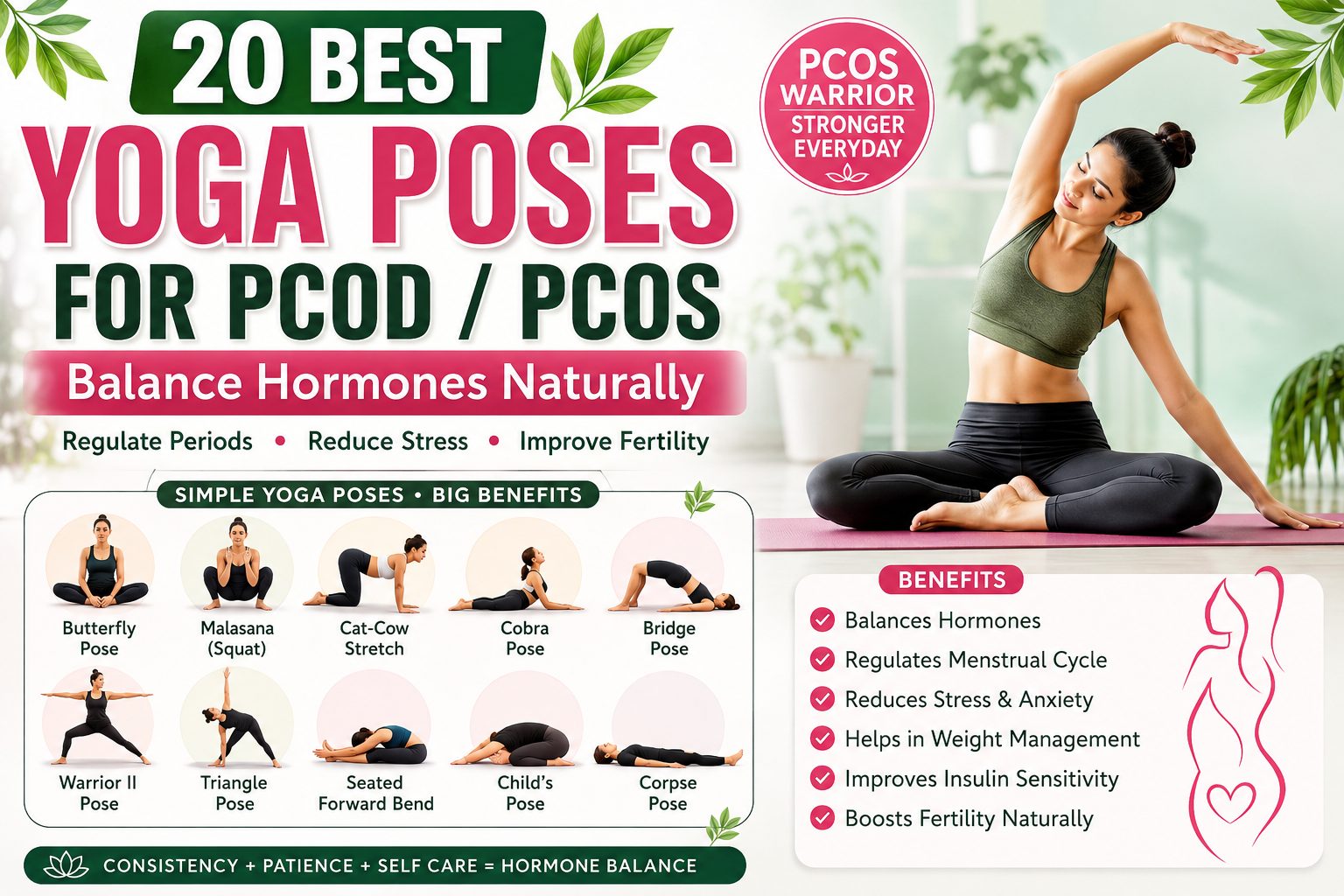
If you've been told you have PCOS or PCOD, you already know the frustration — irregular periods, stubborn weight, fatigue, acne, and a body that feels like it's working against you. It's tempting to want a fix, and the internet is full of promises. Here's the honest picture instead: yoga for PCOS is not a cure, but a growing body of research suggests it can meaningfully support the systems that PCOS disrupts — your stress hormones, insulin sensitivity, circulation, and sleep.
PCOS is, at its core, a hormonal and metabolic condition. That means anything that calms your nervous system and improves how your body handles insulin has a real chance of helping. Yoga does both. It won't replace your doctor, your bloodwork, or medication if you need it — but paired with the right diet and lifestyle habits, it can be one of the most accessible daily tools you have.
"Yoga doesn't override your hormones — it removes some of the static (stress, poor sleep, tension) that makes hormonal imbalance worse."
What Is PCOS (and PCOD)?
Polycystic Ovary Syndrome (PCOS), sometimes referred to as PCOD (Polycystic Ovarian Disease) in some regions, is a common hormonal condition affecting women of reproductive age. It's marked by a combination of irregular or absent ovulation, higher-than-typical androgen (male hormone) levels, and often small fluid-filled follicles on the ovaries visible on ultrasound.
Common causes and contributors include insulin resistance, genetics, chronic low-grade inflammation, and excess androgen production. Typical symptoms include irregular periods, acne, excess facial or body hair, scalp thinning, weight gain (especially around the abdomen), and difficulty conceiving. Diagnosis usually involves a combination of symptom history, blood hormone tests, and a pelvic ultrasound, most often using the Rotterdam criteria.
Two features drive most of the downstream symptoms: hormonal imbalance (elevated androgens and disrupted estrogen-progesterone signaling) and insulin resistance, which is present in a large share of women with PCOS regardless of body weight. Add chronic stress to that mix — which raises cortisol and can worsen both insulin resistance and cycle irregularity — and you can see why a calming, movement-based practice like yoga has genuine physiological relevance, not just a wellness trend.
Benefits of Yoga for PCOS
Here is what we can say about yoga for PCOD and PCOS: the NHS advises regular exercise,[1] and gentle yoga can be one form of it. We could not source claims that specific poses balance hormones, so the poses below are for movement and relaxation.
Stress reduction and cortisol control: Slow, breath-led movement activates the parasympathetic nervous system, which can lower circulating cortisol — a hormone that, when chronically high, worsens insulin resistance and androgen excess.
Better insulin sensitivity: Regular yoga practice has been associated with improved fasting insulin and glucose markers in several small clinical trials involving women with PCOS.
Weight management support: While yoga alone isn't a high-calorie-burn workout, it supports the stress and sleep improvements that make sustainable weight management far easier.
Improved blood circulation: Twists, forward folds, and inversions like Legs Up the Wall support pelvic and abdominal blood flow.
Better sleep quality: Restorative poses and slow breathing in the evening are linked to improved sleep onset and quality — important, since poor sleep worsens both insulin resistance and mood in PCOS.
Reduced anxiety and low mood: Women with PCOS report higher rates of anxiety and depressive symptoms; mind-body practices like yoga are consistently associated with modest but real improvements in both.
Pelvic blood flow and hormonal support: Hip-opening and pelvic poses may support reproductive organ circulation, which some clinicians believe complements — though does not replace — medical fertility care.
20 Best Yoga Poses for PCOS
Go at your own pace. Hold each pose within a comfortable range, breathe slowly through the nose, and stop if you feel sharp pain (mild stretching sensation is normal).
1Butterfly Pose (Baddha Konasana)
BenefitsOpens the hips and groin, stimulates ovarian blood flow, eases period discomfort.
How ToSit tall, soles of feet together, knees out to the sides, gently flap or press knees down.
Duration1–2 minutes, 5–10 slow breaths.
Beginner TipSit on a folded blanket if your hips feel tight.
How ToSquat with feet slightly wider than hips, palms together, elbows pressing knees open.
Duration30–60 seconds, repeat 2–3 times.
Beginner TipPlace a rolled towel under your heels if they lift off the floor.
Who Should AvoidKnee injuries or advanced pregnancy.
3Cat-Cow Stretch (Marjaryasana-Bitilasana)
BenefitsWarms up the spine, relieves lower-back and period tension, calms the nervous system.
How ToOn all fours, inhale arching the back (cow), exhale rounding the spine (cat).
Duration8–10 slow rounds.
Beginner TipMove exactly with your breath, not faster.
Who Should AvoidWrist injuries — practice on forearms instead.
4Low Lunge (Anjaneyasana)
BenefitsOpens hip flexors, improves circulation, builds lower-body strength.
How ToStep one foot forward into a lunge, back knee down, hands on the front thigh or floor.
Duration30 seconds each side.
Beginner TipPlace a folded blanket under the back knee.
Who Should AvoidKnee or hip joint injuries.
5Warrior II (Virabhadrasana II)
BenefitsBuilds strength and stamina, improves circulation, supports insulin sensitivity through muscle engagement.
How ToWide stance, front knee bent over ankle, arms extended parallel to the floor, gaze over front hand.
Duration20–30 seconds each side.
Beginner TipKeep the front knee tracking over (not past) the ankle.
Who Should AvoidKnee or shoulder injuries.
6Triangle Pose (Trikonasana)
BenefitsStretches the sides of the body, stimulates abdominal organs, improves digestion and circulation.
How ToWide stance, front leg straight, hinge at the hip and reach the front hand toward the shin or floor, other arm up.
Duration20–30 seconds each side.
Beginner TipRest your hand on a block or your shin instead of the floor.
Who Should AvoidLow blood pressure or neck issues — keep gaze forward instead of up.
7Seated Forward Bend (Paschimottanasana)
BenefitsCalms the mind, stretches the spine and hamstrings, may support ovarian and pelvic circulation.
How ToSit with legs extended, hinge forward from the hips reaching toward the feet.
Duration1–2 minutes.
Beginner TipBend the knees slightly and use a strap around the feet if hamstrings are tight.
Who Should AvoidLower-back disc issues.
8Cobra Pose (Bhujangasana)
BenefitsStimulates abdominal and reproductive organs, strengthens the back, eases mild stress.
How ToLie face down, palms under shoulders, lift the chest while keeping the pelvis grounded.
Duration15–20 seconds, repeat 3 times.
Beginner TipLift only as high as feels comfortable — don't force a deep backbend.
Who Should AvoidPregnancy or recent back injury.
9Bridge Pose (Setu Bandhasana)
BenefitsStimulates the thyroid and abdominal organs, strengthens glutes and lower back, calming for the nervous system.
How ToLie on your back, knees bent, feet hip-width apart, lift the hips while pressing feet down.
Duration30–45 seconds, repeat 3 times.
Beginner TipPlace a block under the sacrum for a restorative version.
Who Should AvoidNeck injuries.
10Bow Pose (Dhanurasana)
BenefitsStimulates ovaries and abdominal organs, improves posture and circulation.
How ToLie face down, bend the knees, hold the ankles, and lift the chest and thighs together.
Duration15–20 seconds, repeat 2–3 times.
Beginner TipOnly lift as far as comfortable; a small lift is still effective.
Who Should AvoidPregnancy, hernia, or recent abdominal surgery.
11Happy Baby Pose (Ananda Balasana)
BenefitsGently opens the hips and inner thighs, relieves lower-back tension, very calming.
How ToLie on your back, grab the outer edges of your feet, knees toward the armpits.
Duration1 minute, gently rocking side to side.
Beginner TipHold behind the thighs if reaching the feet is difficult.
Who Should AvoidKnee injuries or late pregnancy.
12Seated Spinal Twist (Ardha Matsyendrasana)
BenefitsImproves digestion, stimulates abdominal organs, releases tension along the spine.
How ToSit tall, cross one leg over the other, twist gently toward the bent knee using your arm as leverage.
Duration30 seconds each side.
Beginner TipKeep the twist gentle and lead with a long spine, not force.
Who Should AvoidPregnancy or recent spinal injury.
13Boat Pose (Navasana)
BenefitsStrengthens the core, supports metabolic health through muscle engagement.
How ToSit balanced on the sit bones, lift the shins parallel to the floor, arms extended forward.
Duration15–20 seconds, repeat 2–3 times.
Beginner TipKeep knees bent and feet on the floor for an easier variation.
Who Should AvoidLow back pain or pregnancy.
14Legs Up the Wall (Viparita Karani)
BenefitsImproves pelvic and lower-body circulation, deeply calming, supports sleep quality.
How ToLie on your back with legs extended up a wall, arms relaxed at your sides.
Duration5–10 minutes.
Beginner TipPlace a cushion under the hips for extra support.
Who Should AvoidGlaucoma or serious eye conditions — check with your doctor first.
15Child's Pose (Balasana)
BenefitsDeeply relaxing, releases lower-back and hip tension, lowers stress.
How ToKneel, big toes touching, sit back onto the heels, and fold forward with arms extended.
Duration1–2 minutes.
Beginner TipWiden the knees for more room if you feel pressure on the belly.
Who Should AvoidKnee injuries.
16Deep Squat Hold (Malasana Variation)
BenefitsOpens the hips and pelvis, improves lower-body circulation and mobility.
How ToHold a supported deep squat, using a wall or chair for balance if needed.
Duration1–2 minutes, broken into shorter holds if needed.
Beginner TipHold onto a sturdy chair or doorframe for balance support.
Who Should AvoidKnee pain or balance issues without support.
17Side Stretch (Parsva Sukhasana)
BenefitsStretches the obliques and rib cage, improves breathing capacity, relieves tension.
How ToSit cross-legged, reach one arm overhead and lean to the opposite side.
Duration20–30 seconds each side.
Beginner TipKeep both sit bones grounded as you lean.
Who Should AvoidAcute rib or shoulder injury.
18Knee-to-Chest Stretch (Apanasana)
BenefitsRelieves bloating and cramps, gently massages the abdominal organs, calming for the nervous system.
How ToLie on your back and hug both knees into the chest, rocking gently side to side.
Duration1 minute.
Beginner TipDo one leg at a time if both knees together feels like too much pressure.
Who Should AvoidRecent abdominal surgery.
19Supported Bridge (Restorative)
BenefitsA gentler, passive version of Bridge Pose that calms the nervous system and supports hormone-friendly rest.
How ToLift the hips into Bridge Pose, then slide a yoga block under the sacrum and relax fully.
Duration3–5 minutes.
Beginner TipStart with the block on its lowest height and build up.
Who Should AvoidNeck injuries.
20Savasana (Corpse Pose)
BenefitsDeep relaxation that lowers cortisol and helps the body absorb the benefits of the practice.
How ToLie flat on your back, arms relaxed at your sides, palms up, eyes closed.
Duration5 minutes, always practiced last.
Beginner TipUse a rolled blanket under the knees if your lower back feels tight.
Who Should AvoidSafe for virtually everyone; use a bolster under the knees for comfort.
20-Minute Daily Yoga Routine for PCOS
New to yoga? This simple sequence uses poses from the list above and takes about 20 minutes, best practiced in the morning or evening on an empty-ish stomach.
Cat-Cow Stretch — 2 minutes (warm-up)
Low Lunge — 1 minute each side
Warrior II — 30 seconds each side
Triangle Pose — 30 seconds each side
Malasana — 1 minute
Butterfly Pose — 2 minutes
Seated Spinal Twist — 30 seconds each side
Cobra Pose — 3 rounds of 15 seconds
Bridge Pose — 3 rounds of 30 seconds
Happy Baby Pose — 1 minute
Legs Up the Wall — 5 minutes
Savasana — 3–5 minutes
Aim for consistency over intensity — practicing gently most days is easier to sustain than one intense session a week.
Diet Tips to Pair With Your Yoga Practice
Yoga works best alongside nutrition that supports insulin sensitivity and hormone balance:
Protein: Include a source of protein (eggs, lentils, paneer, fish, chicken, tofu) at every meal to stabilize blood sugar.
Fiber: Vegetables, whole grains, and legumes slow glucose absorption and support gut and hormone health.
Healthy fats: Nuts, seeds, olive oil, and avocado support hormone production and satiety.
Hydration: Adequate water supports digestion, energy, and helps reduce bloating and cramping.
Foods to limit: Refined sugar, sugary drinks, and heavily processed foods, which can worsen insulin resistance and inflammation.
Lifestyle Tips for Hormone Balance
Sleep: aim for good-quality sleep.
Walking: a daily walk is an easy way to stay active, and the NHS advises regular exercise.[1]
Stress management: Journaling, breathing exercises, or short meditation breaks reduce cortisol alongside yoga.
Strength training: a sensible part of regular exercise; ask your doctor how much suits you.
Meditation: even a few minutes a day can help you unwind.
Screen time: Reducing screens an hour before bed supports better sleep and hormone regulation.
Daily routine: Consistent meal times and sleep-wake times help regulate the body's internal hormonal rhythm.
Safety Tips: When to Check With Your Doctor First
Speak with your doctor before starting yoga if you're pregnant, have uncontrolled high blood pressure, a recent surgery or injury, severe back or joint issues, glaucoma, or a heart condition. If any pose causes sharp pain, dizziness, or shortness of breath, stop immediately.
Myths vs Facts About Yoga for PCOS
Myth
Fact
Yoga can cure PCOS completely.
Yoga supports symptom management; it doesn't cure the underlying hormonal condition.
You need to be flexible to start.
Yoga meets you where you are — modifications make every pose accessible to beginners.
Yoga alone will cause significant weight loss.
Yoga supports stress and sleep, which aid weight management, but works best combined with diet and other movement.
Only fertility-focused poses matter.
Whole-body poses that reduce stress and improve insulin sensitivity matter just as much as pelvic-focused ones.
Yoga replaces medication.
Yoga is a complementary practice, not a substitute for prescribed treatment.
Track Your Cycle Alongside Your Practice
Use our free tools to track your progress as you build a consistent routine.
No. Yoga can be part of staying active and managing stress, but PCOS (PMOS) is a medical condition that should be managed with your doctor’s guidance. The NHS says there is no cure, but treatments and lifestyle changes can help.[1]
How often should I practice yoga for PCOS?
There is no proven schedule. Gentle practice a few times a week is a reasonable goal if you enjoy it; ask your doctor what suits you.
Can yoga help with irregular periods?
We could not source evidence that yoga regulates periods. Irregular periods are a main symptom the NHS lists for PMOS, so get them checked rather than relying on yoga alone.[1]
Is yoga safe during my period?
Yes, gentle yoga is generally safe during your period. Many women prefer to avoid intense inversions and instead focus on restorative poses like Child's Pose and Legs Up the Wall.
Which yoga pose is best for PCOS weight loss?
No single pose drives weight loss. Regular exercise and a balanced diet both matter; the NHS suggests trying to lose weight if you are overweight, and your doctor can advise you.[1]
How long before I notice benefits?
Timing varies. Many people feel calmer after practising regularly, but we have no source for timelines for hormonal or cycle changes.
Can beginners with no flexibility do these poses?
Yes. Every pose in this guide includes beginner modifications, and flexibility improves naturally with consistent practice.
Should I combine yoga with cardio for PCOS?
The NHS advises regular exercise,[1] and combining gentle yoga with brisk walking is a reasonable mix. Ask your doctor what suits you.
Is hot yoga recommended for PCOS?
Not necessarily. Choose a comfortable temperature and stop if you feel dizzy or unwell.
Can yoga help with PCOS-related fertility concerns?
Yoga may support the body indirectly by lowering stress and improving circulation, but fertility concerns related to PCOS should always be evaluated and managed with a doctor or fertility specialist.
Conclusion
Managing PCOS is rarely about one dramatic change — it's about small, consistent habits that add up. A gentle, regular yoga practice can genuinely support how your body handles stress, insulin, and sleep, three of the biggest levers in hormonal health. Give it time, stay consistent, and treat it as one part of a bigger picture that includes medical care, nutrition, and movement you enjoy. Your body didn't get here overnight, and it doesn't need to heal overnight either.
Kiran Patel
Kiran Patel, BSN, MSN, is a Women's Health Content Writer at Bloom Health Woman, creating research-informed educational content on women's health.
This article is for educational purposes only and is not a substitute for professional medical advice, diagnosis, or treatment. Always consult your doctor before starting a new exercise routine, especially if you have an existing health condition.
🍪 We use cookies and similar technologies for site preferences, analytics and advertising (including Google services). Calculator inputs are processed in your browser and are not sent to our servers. Privacy Policy