Breast Health ยท Awareness

Breast Cancer Awareness Month: Aware Today for a Healthier Tomorrow

Dr. Nesa Mirza, MBBS Written by Dr. Nesa Mirza, MBBS 5 min read October 15, 2026 Written by a doctor
Woman in a pink t-shirt with a pink ribbon smiling beside the title Breast Cancer Awareness Month: aware today for a healthier tomorrow

Guest article: written by a credited contributor for education, not as medical advice. See our Editorial Policy.

Aware today for a healthier tomorrow
October Breast Cancer Awareness Month badge with a pink ribbon
October is Breast Cancer Awareness Month

Introduction

About 80% of breast cancers occur in women with no specific risk factors other than sex and age.
What you can do

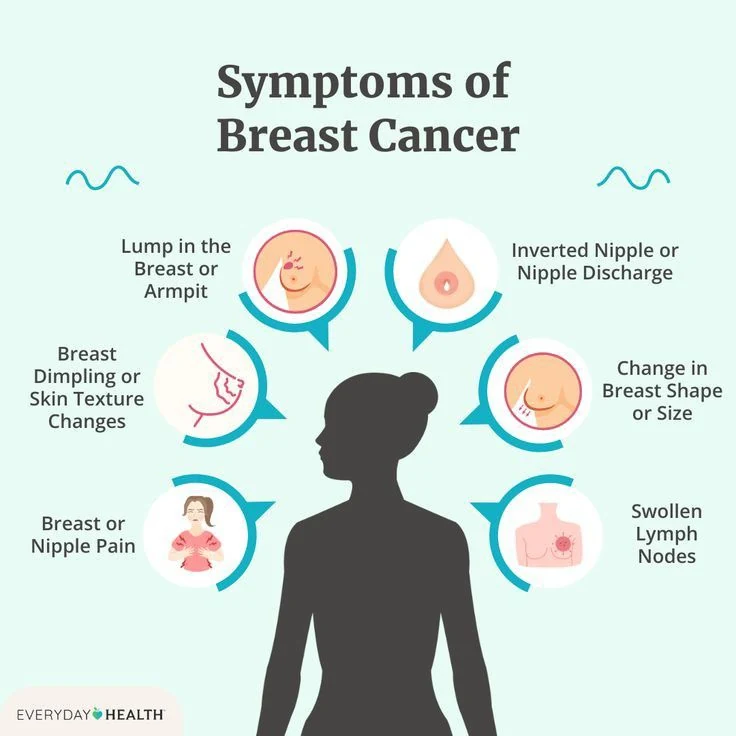
Infographic of common breast cancer symptoms: lump in the breast or armpit, nipple inversion or discharge, skin dimpling, change in breast shape or size, breast or nipple pain and swollen lymph nodes
Common symptoms of breast cancer Image credit: Everyday Health (via Artofit).
1

Know the signs

Lump in the breast or armpits,
Change in size/ shape of breast,
Discharge from nipple,
Redness/ swelling

2

Get screened

Early detection helps in timely treatment

3

Adopt a healthy lifestyle

Maintain a healthy weight,
Eat balanced diet,
Avoid tobacco/ alcohol

4

Support survivors

Help remove stigma,
Spread awareness

5

Be a change maker

Educate yourself and others,
Promote women's health.
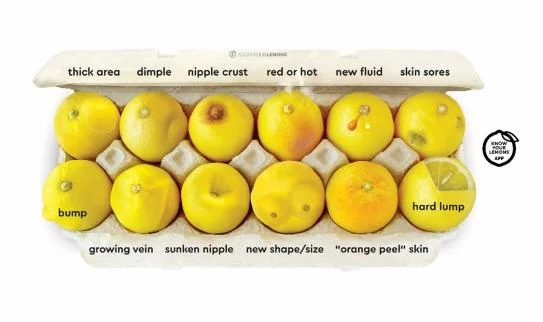
Visual guide showing twelve breast changes to look for, including a hard lump, dimple, nipple crust, new fluid, skin sores, growing vein, sunken nipple, new shape or size and orange-peel skin
12 signs of breast cancer Image credit: Know Your Lemons Foundation.

What is breast cancer

  1. A disease where abnormal cells in the breast grow uncontrollably and form a tumor.
  2. It starts in different parts of the breast such as the milk ducts or milk producing glands.
  3. The cancer cells spread to nearby tissues.
  4. It can occur in both women and men.
  5. Early detection and timely treatment improve outcomes.

Awareness

  1. Breast cancer usually develops due to multiple genetic changes over time and not from a single cause.
  2. These changes can be influenced by a contribution of factors, including age, hormones, genetic and lifestyle factors.

Broad classification of breast cancer

Two broad headings to classify breast carcinoma -

  1. Ductal carcinoma - cancer starts in the cells lining the milk ducts.
  2. Lobular carcinoma- cancer starts in the milk producing lobules.

Men should also learn about breast carcinoma. Why?

Breast cancer is not only a woman's disease.
Look for any lump, nipple change, discharge or skin changes and get it checked.
About 0.5% - 1% of all breast cancer occur in men.
Know the warning signs

  1. New lump in breast or armpit
  2. Change in breast size or shape
  3. Nipple discharge
  4. Nipple inversion
  5. Skin redness or swelling
  6. Persistent change in the breast skin texture, size or shape
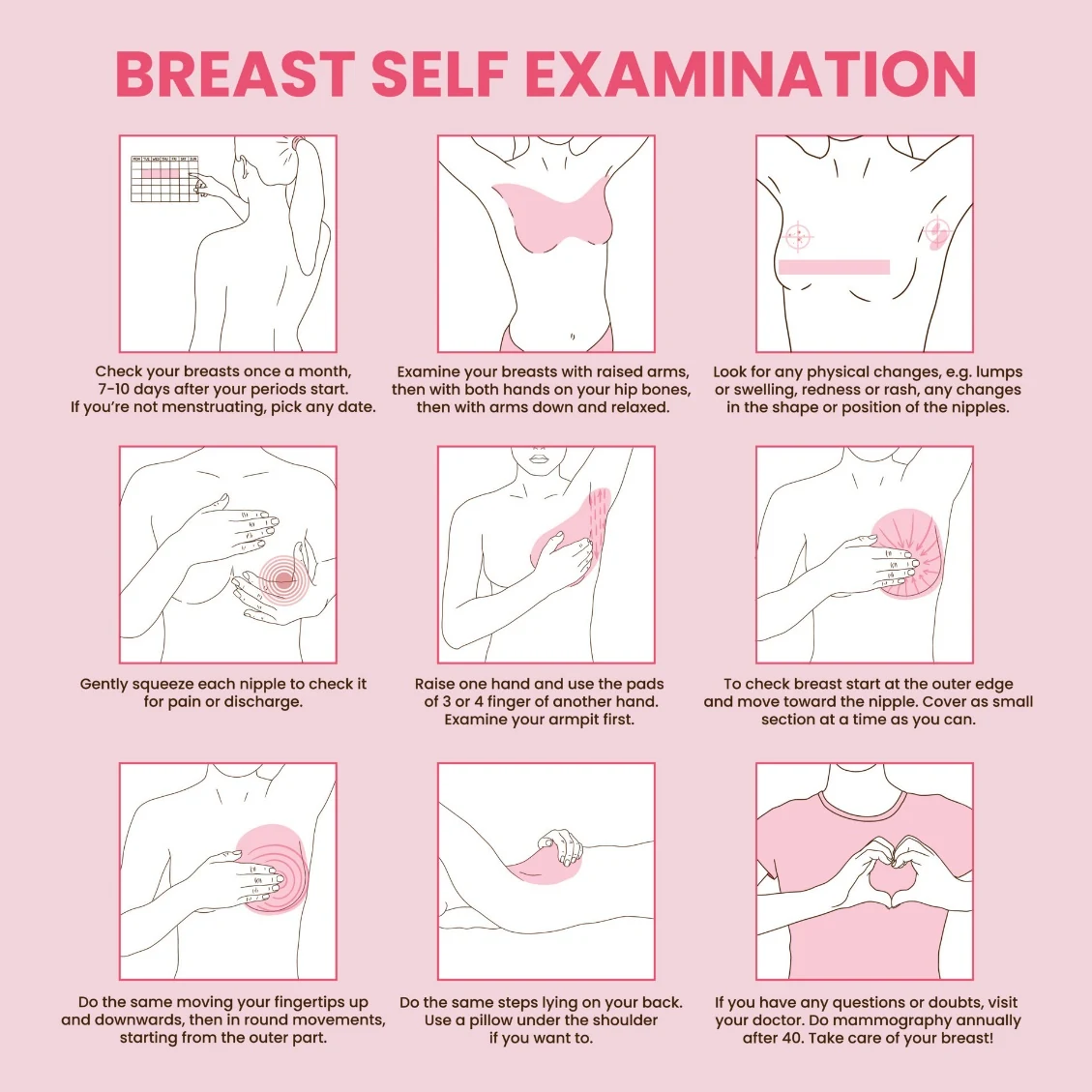
Nine-step infographic explaining how to do a breast self-examination, including timing, looking in a mirror, checking the armpit, circular finger movements and lying down
Breast self-examination guidelines Image source: not known.

Breast self examination (BSE)

  1. A breast self-exam is a physical and visual inspection of your breasts done regularly, typically monthly. The goal is to check for symptoms of breast cancer, such as lumps, changes in shape, skin texture, or discharge. Although it does not replace mammograms or clinical breast exams, it remains a valuable method for early warning, especially in areas with limited access to screening facilities.
  2. Understanding how to do breast self-examination correctly ensures that you're not just going through the motions but engaging with your health. Regular exams increase your chances of noticing any new or unusual developments early.

Visual inspection

Begin your breast exam by standing topless in front of a mirror with your arms relaxed at your sides. Observe each breast's size, shape, and symmetry. Then, raise your arms overhead to see if both breasts move evenly.

Next, press your hands on your hips and lean slightly forward to tighten your chest muscles. Look for changes to look for in breasts, such as skin puckering, nipple inversion, or visible swelling. These may be visual signs of breast cancer that need medical evaluation.

Manual palpation

The next step in the step-by-step breast check is palpation using your fingers to feel for irregularities.

Standing or shower method: With the pads of your fingers, press gently but firmly in a circular motion, covering the entire breast area from collarbone to bra line and from armpit to cleavage. Use light, medium, and firm pressure to examine different tissue layers.

Lying down method: Place a pillow under your shoulder and your opposite hand behind your head. Again, use the opposite hand to examine the breast in a vertical strip, circular, or wedge pattern. Don't forget the nipple and the area under the armpit, where lymph nodes are located; both can be key in how to detect breast lump changes.

Dr. Nesa Mirza, MBBS, general practitioner and government medical officer, Kolkata
โœ๏ธ About the Author
Dr. Nesa Mirza, MBBS
General Practitioner & Government Medical Officer, Urban Primary Health Centre
Based in: Kolkata, West Bengal, India  ยท  Experience: Primary care, gynaecology residency

Dr. Nesa Mirza, MBBS, is a general practitioner based in Kolkata, West Bengal, India. She completed her MBBS at ICARE Institute of Medical Sciences and Research & Dr. Bidhan Chandra Roy Hospital, Haldia, West Bengal. She works as a Government Medical Officer at an Urban Primary Health Centre, where she treats patients every day. She has also worked as a Gynaecology Resident Doctor, gaining experience in caring for pregnant mothers in a government healthcare setting. She has started writing as a medical content writer on LinkedIn, and two of her articles have been published in online health magazines. She is passionate about creating awareness and educating vulnerable groups.

๐Ÿ“– Related Articles

Image credits & copyright: The symptoms infographic is credited to Everyday Health (via Artofit) and the "12 signs of breast cancer" visual guide to the Know Your Lemons Foundation. The October awareness badge and the self-examination infographic were supplied by the author from public sources, and their original creators are not known to us. All images remain the property of their respective owners and are shown for health education only. If you own an image and want it credited or removed, please contact us and we will act promptly.
Medical Disclaimer: This article is for educational purposes only and does not replace professional medical advice, diagnosis or treatment. If you notice any change in your breasts, see a doctor.

Further reading from health authorities

General topic pages from authoritative organizations for further reading. They are suggested resources and are not a line-by-line citation of the statements in this article. Always confirm personal medical decisions with a healthcare professional.