Why oral health deserves a place alongside antenatal and postnatal care—for the wellbeing of mothers and the families they are building.
When a woman becomes pregnant, it brings a special kind of joy to the family. But behind that joy is a profound transformation that only she can truly experience—the physical, hormonal and emotional changes that unfold as her body adapts to nurture a new life. Pregnancy is not simply about the baby growing within her; it is also a time when her own body is changing, adjusting and responding in remarkable ways.
As pregnancy progresses, the focus naturally shifts towards the little life growing inside her: scans, check-ups, nutrition, supplements, foetal growth and preparations for the baby’s arrival.
But amidst all of this attention to the baby, how often do we pause to ask: How is the mother herself doing?
Maternal healthcare increasingly recognizes the importance of a woman’s emotional wellbeing, mental health and overall quality of life. Yet another essential aspect of her health can still be overlooked: her oral health.
During pregnancy, considerable emphasis is placed on nutrition. Women are encouraged to eat a balanced diet, consume a variety of nutritious foods and meet their nutritional requirements. But while we focus on what a mother eats, do we give enough attention to the health of the mouth through which she eats?
The mouth is the entry point for food. Healthy teeth help us bite and chew, while the tongue and other oral structures help move food and facilitate swallowing. Oral health therefore plays an important role in eating comfortably, maintaining nutrition and preserving quality of life. The World Health Organization (WHO) recognizes oral health as an integral part of general health and wellbeing. [1]
If we emphasize the importance of good nutrition during pregnancy, shouldn’t we also pay attention to the health of the mouth that makes eating and chewing possible?
Why oral health matters during pregnancy
Pregnancy brings remarkable changes to a woman’s body, and the mouth is no exception. Hormonal changes can influence how the gums respond to dental plaque, making some women more susceptible to gingival inflammation, swelling and bleeding.
Morning sickness, repeated vomiting, changes in eating habits and cravings may also influence oral health. Frequent exposure to stomach acid can contribute to tooth enamel erosion, while fatigue and changes in daily routines can make maintaining oral hygiene more challenging.
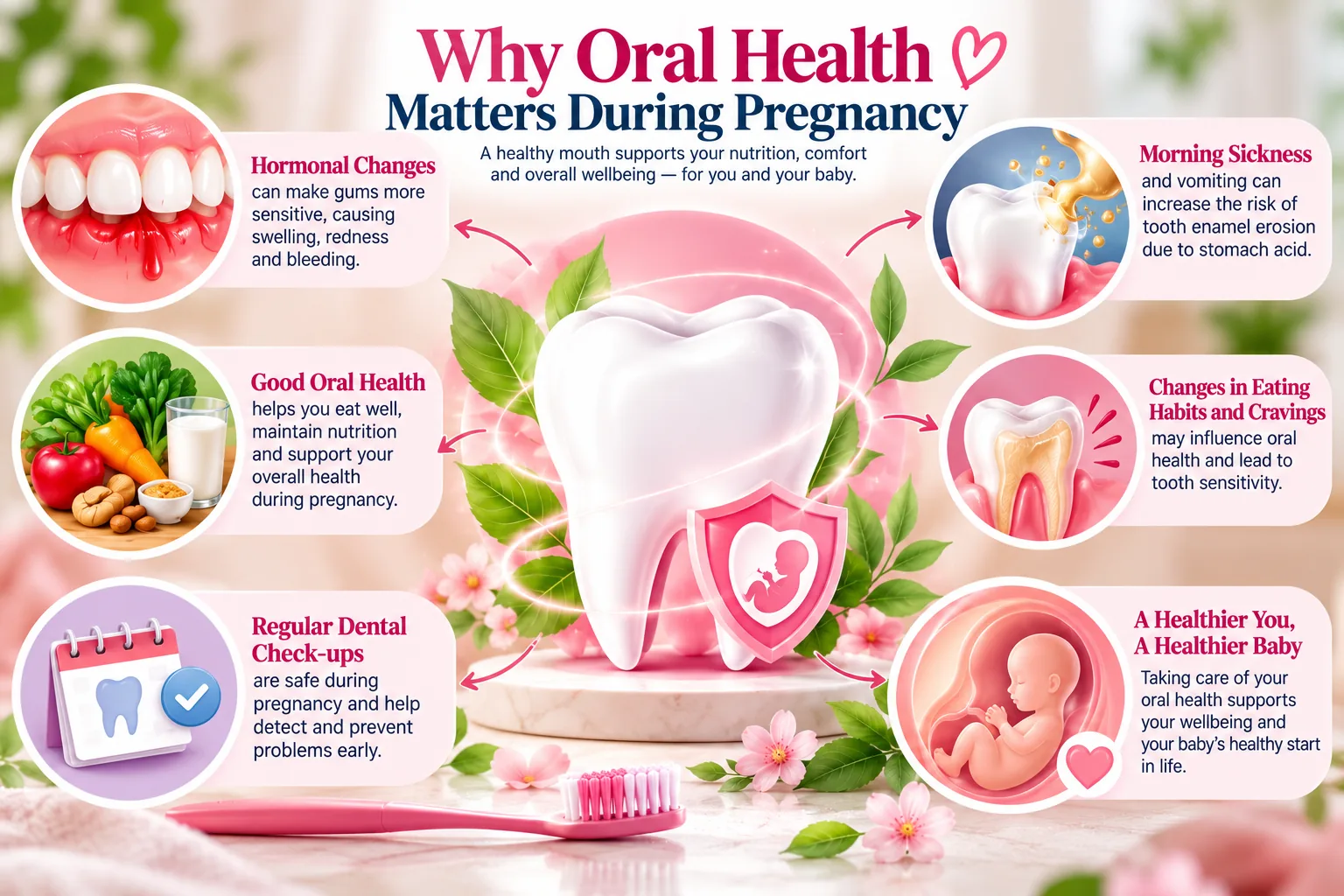
These changes make oral care particularly important during pregnancy. They also provide an opportunity to introduce simple preventive habits that can benefit a woman well beyond childbirth.
The familiar belief that a woman inevitably loses a tooth with every pregnancy is a myth. Pregnancy does not automatically damage teeth. With appropriate oral hygiene, preventive care and timely dental assessment, women can take positive steps to protect their teeth and gums throughout this important stage of life.
Oral health should be an essential part of antenatal care
Antenatal care focuses on supporting the health of both mother and baby. Alongside monitoring fetal growth, blood pressure, nutrition and other aspects of maternal health, oral health deserves a place in routine pregnancy care.
The American College of Obstetricians and Gynecologists (ACOG) recommends discussing oral health with pregnant women and assessing their oral-health needs during prenatal care. [2]
This need not be complicated. A few simple questions can make a difference:
- Do your gums bleed when you brush?
- Have you experienced toothache, swelling or sensitivity?
- When did you last visit a dentist?
- Are nausea or vomiting making oral hygiene difficult?
These questions can encourage women to recognize their oral-health needs and seek appropriate dental care when required.
Integrating oral-health education into antenatal visits can also help healthcare professionals provide consistent advice and connect women with dental services.
Antenatal care should look after the whole woman—not only monitor the growing baby.
A global perspective: Why is maternal oral health still overlooked?
The importance of oral health during pregnancy is recognized internationally, yet integrating dental care into routine antenatal services remains a challenge across different healthcare systems.
One might assume that in countries where dental services are more accessible, or where insurance helps cover treatment costs, pregnant women would routinely receive appropriate oral healthcare. However, access alone does not guarantee that care will be used.
A 2025 systematic review examined 31 studies exploring barriers to oral healthcare during pregnancy across different settings. It identified dental treatment costs, limited oral-health awareness and misconceptions about the safety of dental treatment for the developing baby as among the main barriers to using dental services. [3]
A subsequent mixed-methods systematic review, published in 2026, brought together evidence from 55 studies across 24 countries. It identified several factors influencing pregnant women’s use of dental services, including concerns about treatment safety, fear of dental procedures, financial barriers, lack of insurance coverage, competing priorities and limited referral between antenatal and dental services. [4]
These findings suggest that the challenge is not limited to one country or healthcare system. Even where services are available, women may not necessarily recognize oral health as a priority during pregnancy.
Perhaps part of the answer lies in how we approach maternal care. During antenatal visits, attention understandably centres on the developing baby—monitoring fetal growth, reviewing scans, discussing nutrition and preparing for childbirth. A woman’s own health receives attention too, but oral health may not always be included in these conversations.
For many expectant mothers, the baby’s wellbeing becomes the immediate priority. Dental appointments may seem less urgent, particularly when there is no pain or obvious discomfort. Some women may also believe that dental treatment should be avoided until after delivery, even when appropriate care is available.
This highlights an important distinction: making healthcare available is not the same as making it a routine part of care.
The solution is not simply to ask women to visit a dentist. Healthcare professionals and healthcare systems also have a role in making oral health a natural part of pregnancy care.
A simple question about gum health, clear information about appropriate dental treatment and a referral when needed can help women make informed decisions about their health.
The goal is not to take attention away from the growing baby, but to extend that same thoughtful care to the mother.
Dental care during pregnancy: Reassurance for expectant mothers
Many women wonder whether it is safe to visit a dentist during pregnancy. Reassurance is important because appropriate dental care can help women maintain comfort and oral health throughout pregnancy.
Preventive, diagnostic and necessary dental treatment can be provided during pregnancy. Dental X-rays, when clinically necessary, and appropriate local anaesthesia can also be used under professional guidance. [2]
A pregnant woman should inform her dentist about her pregnancy and discuss her medical history, symptoms and treatment needs. Her dental and maternity-care teams can coordinate when necessary to ensure that care is appropriate for her individual circumstances.
The message is simple: pregnancy is a time to care for oral health and not to put it on hold.
The importance of oral health after delivery
The arrival of a baby brings happiness, new responsibilities and a completely different daily routine. A mother may be recovering from childbirth, adjusting to breastfeeding, managing interrupted sleep and learning to care for her newborn.
During this time, her own health takes a back seat even though it remains as important as it was earlier.
The World Health Organization emphasizes person-centered postnatal care that supports the health and wellbeing of both the woman and her newborn. [5] Oral health deserves to remain part of this ongoing care.
Women who experienced gum problems, toothache or other dental concerns during pregnancy can seek follow-up care. All new mothers can benefit from maintaining their daily oral-hygiene routines and attending appropriate dental check-ups.
Brushing twice daily with fluoride toothpaste, cleaning between the teeth and limiting frequent sugary foods and drinks remain important after delivery.
Breastfeeding and caring for a newborn do not mean that a mother must put her own health aside. Supporting her recovery and wellbeing helps her care for herself as she adjusts to motherhood.
The baby may now be the centre of the family’s attention, but the mother’s health continues to matter.
From maternal oral health to a baby’s first smile
Pregnancy and early motherhood are valuable opportunities to establish healthy habits for the next generation.
A child’s oral-health journey begins long before the first dental visit. Parents and caregivers influence feeding practices, oral hygiene and the everyday habits that help protect a child’s teeth.
Maternal oral-health education can help families understand the importance of maintaining their own oral hygiene while preparing to care for their baby’s emerging teeth. Caregivers can also avoid saliva-sharing practices, such as sharing spoons or cleaning a pacifier with their mouths, which may transfer cavity-associated bacteria. [2]
A conversation about a mother’s gums can become a conversation about her baby’s first tooth, early brushing and preventive dental visits.
When we support maternal oral health, we also create an opportunity to build healthier oral-health habits within the family.
Five simple ways to care for oral health during pregnancy and after delivery
Good oral care does not have to be complicated. Small, consistent habits can make a meaningful contribution to oral health.
- Brush twice daily.
Use fluoride toothpaste and a soft-bristled toothbrush to clean your teeth gently and thoroughly. - Clean between your teeth.
Use dental floss or another suitable interdental cleaning aid to remove plaque from areas a toothbrush may miss. - Pay attention to your gums.
If you notice persistent bleeding, swelling, pain or other changes, arrange a dental assessment. - Continue dental check-ups.
Inform your dentist if you are pregnant or have recently delivered so that your care can be tailored to your needs. - Make oral health part of your self-care.
Alongside balanced nutrition, rest, hydration and emotional wellbeing, give your teeth and gums the attention they deserve.
If vomiting is frequent, ask your healthcare or dental professional for advice on protecting your teeth from acid exposure.
A small change that could make a meaningful difference
Imagine if every antenatal conversation about nutrition, supplements and fetal growth also included a simple question:
“How are your teeth and gums?”
And imagine if postpartum care continued to ask not only how the baby was feeding and growing, but also how the mother was recovering and feeling.
These small additions could help bring oral health into a more complete understanding of maternal wellbeing.
The evidence suggests that oral-health education, appropriate referrals and better coordination between maternity and dental services offer practical ways to improve access to care. [3,4]
The opportunity is not simply to encourage more dental visits. It is to make oral health a natural part of conversations about women’s health—before pregnancy, during antenatal care and throughout the postpartum period.
Caring for the mother is an investment in the future of our nation
Pregnancy and motherhood are extraordinary transitions. They bring changes, responsibilities and new priorities, but they should never make a woman’s own health any less important.
Her nutrition matters. Her emotional wellbeing matters. Her physical recovery matters. And her oral health matters too.
Every pregnant woman deserves love, respect, support and comprehensive healthcare—not only for the life she is nurturing, but also for her own health and wellbeing. Families, healthcare professionals and society share the responsibility of helping mothers thrive.
A healthy, supported mother has a stronger foundation from which to nurture the next generation. Healthy generations, in turn, contribute to the wellbeing and progress of our nation.
By bringing oral health into antenatal and postnatal care, we can encourage women to seek timely dental advice, help healthcare professionals recognize oral-health needs and support healthier habits within families.
The aim is not to add another burden to a mother’s responsibilities. It is to remind her—and the people caring for her—that her health deserves attention at every stage.
Caring for the baby begins with caring for the mother. And caring for the mother means caring for the whole woman—including her oral health.
Frequently asked questions
1. Why is oral health important during pregnancy?
Pregnancy-related hormonal changes and changes in eating habits can affect the gums and teeth. Maintaining oral hygiene and receiving appropriate dental care are important parts of maternal wellbeing.
2. Is it safe to visit a dentist during pregnancy?
Yes. Preventive, diagnostic and necessary dental care can be provided during pregnancy. Inform your dentist that you are pregnant so that treatment can be planned according to your individual needs. [2]
3. Why do gums bleed during pregnancy?
Hormonal changes can increase the gums’ response to dental plaque, leading to inflammation and bleeding. Persistent bleeding or swelling should be assessed by a dental professional.
4. Why is postpartum oral health important?
After delivery, a mother’s own health can easily receive less attention as she cares for her newborn. Continuing oral hygiene and addressing dental concerns remain important for her comfort and overall wellbeing.
5. How can a mother support her baby’s future oral health?
Maintaining her own oral hygiene, learning about infant oral care and establishing healthy feeding and brushing practices can help support her child’s oral-health journey from the beginning.
References
Helpful tools & related reading

✍️ About the Author
Prof. (Dr.) Meetika Pahuja
MDS (Public Health Dentistry) | Professor, Public Health Dentistry
Credentials: MDS · Experience: 12 years in dental education, public health and academic research
Prof. (Dr.) Meetika Pahuja, MDS (Public Health Dentistry), is a public health researcher, academician and enthusiastic health writer with 12 years of professional experience. She is the owner of Dental Aesthetic World and has contributed to academic literature through research articles, published monographs and book chapters. Passionate about evidence-based health communication, she specialises in translating complex medical and scientific information into clear, accessible and reader-friendly content. Her interests include preventive dentistry, maternal and child oral health, public health and promoting awareness of the often-overlooked connections between oral health and overall wellbeing.
Medical Disclaimer: This article is intended for health education and does not replace individualized medical or dental advice. Pregnant and postpartum women should consult qualified healthcare professionals for advice tailored to their circumstances.